Get Full Government Meeting Transcripts, Videos, & Alerts Forever!
Get email alerts on the Criminal Liability topic
No spam. Unsubscribe anytime.
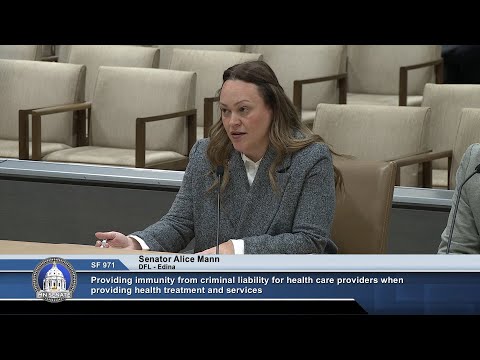
Committee lays over controversial bill that would limit criminal charges for unintentional medical errors
Summary
Senate File 971, which would shield health care providers from criminal prosecution for unintentional errors, was laid over after extended testimony and debate about scope and accountability.
Senate File 971, a bill to limit criminal prosecution of health care providers for unintentional errors made in good faith, drew extended testimony and deliberation on Feb. 18, 2025. After prolonged debate and a contested amendment, the Health and Human Services Committee laid the bill over for further work rather than advancing it.
Sponsor and supporters: Senator Mann said the proposal would protect clinicians from criminal prosecution for honest mistakes and encourage reporting and systems‑level learning. ‘‘This bill does not protect gross negligence, recklessness, or misconduct, nor does it limit patient rights,’’ he said. Supporters included chief nursing officers and nursing leaders who warned that criminal prosecutions in other states had chilled reporting and threatened recruitment.
Opposition and concerns: Dr. Patrice Neerad opposed the bill on grounds it would eliminate accountability and create sweeping immunity; she called the bill too broad and said it would erode public trust. Members also raised concerns about the scope of immunity, how it would interact with existing criminal statutes (including assisted suicide or willful misconduct), and whether additional carve‑outs were needed.
Amendment and debate: Senator Liske offered an A1 amendment to carve out acts or omissions related to assisted suicide from the bill’s immunity provisions. Debate over that amendment grew heated; sponsors and some members argued the existing carve‑outs for willful, malicious or grossly negligent conduct already addressed the concern, while others wanted an explicit statutory carve‑out. Several members urged laying the bill over for further drafting and legal review.
Committee action and next steps: After extended debate — and with multiple senators saying the bill was not yet ready — the committee laid SF971 over for future consideration. The bill will not move to Judiciary from this committee at this hearing; sponsors said they will confer with counsel and stakeholders to address concerns.