Get Full Government Meeting Transcripts, Videos, & Alerts Forever!
Get email alerts on the Interstate Custody topic
No spam. Unsubscribe anytime.
Appeals court questions Indiana requisition and proof of entitlement in interstate custody dispute
Summary
In Matter of Return of a Child (24P1190) the Appeals Court heard whether the juvenile court erred by treating an Indiana requisition as conclusive proof of Indiana custody and by failing to obtain proof of entitlement and to consult the Indiana tribunal. Child counsel and DCF urged reversal, saying the record shows no Indiana custody or placement
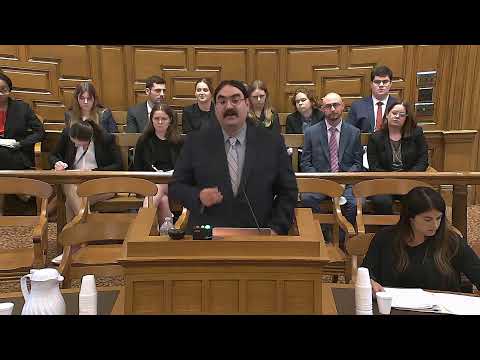
Laura Openshaw, representing the minor whose return is contested, argued that the juvenile court erred by accepting an Indiana requisition without the proof of entitlement the Interstate Compact on Juveniles (ICJ) and related rules require.
Openshaw told the panel that ORR records in the appendix show the child had been released by federal ORR to a vetted sponsor and that HHS regulations state a sponsor release means ORR no longer has legal custody. She said the juvenile court made "unreasonable inferences" and did not call the Indiana court or otherwise obtain documents showing that Indiana had custody before Massachusetts issued its February 2024 order. The record, she said, does not contain Indiana court pleadings or proof that Indiana had made a custody determination; she urged reversal or, alternatively, remand for factfinding.
Assistant Attorney General Anna Lemelski and DCF counsel responded that the record, including correspondence between agencies, supports the conclusion that Indiana had taken steps toward custody and that the juvenile court erred in not treating the requisition as proof for return under ICJ rules. The AG’s office emphasized the child’s safety and argued that returning the child without proper proof would risk subjecting him to the trafficking environment he and his brother escaped.
The panel examined the ICJ rules requiring proof of entitlement with a requisition and asked whether the Massachusetts court should have contacted the Indiana tribunal; counsel acknowledged gaps in the record and the unusual absence of an Indiana appellee or agency representative in the proceeding. The panel suggested the court could ask the Indiana court for pleadings or remand for additional proceedings to clarify whether an Indiana custody order predated Massachusetts action.
No final ruling was issued at argument; the panel indicated it may direct follow‑up to obtain Indiana court records or remand for further fact development.