Get Full Government Meeting Transcripts, Videos, & Alerts Forever!
Get email alerts on the Criminal Threats topic
No spam. Unsubscribe anytime.
Appeals court weighs sufficiency of evidence in Bridgewater threat conviction
Summary
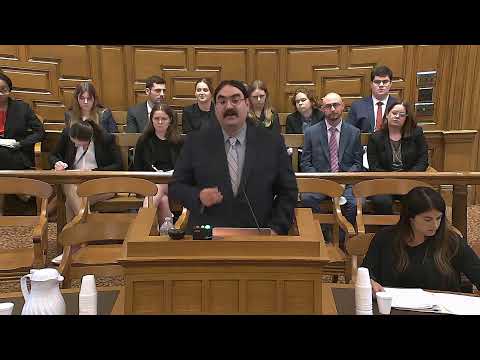
Corey Arder, representing Christopher Tartaglione, told the three‑judge panel that the conviction for threatening to commit a crime under Mass. Gen. Laws c.275 §2 should be overturned for insufficiency of evidence.
Corey Arder, representing Christopher Tartaglione, told the three‑judge panel that the conviction for threatening to commit a crime under Mass. Gen. Laws c.275 §2 should be overturned for insufficiency of evidence.
"Mr. Tartaglione backs away from the encounter and ultimately leaves the scene," Arder said (argument transcript). He urged the court that the crucial fourth element — that the defendant made the threat under circumstances that reasonably caused the victim to fear the defendant had both the intent and the ability to carry out the threat — was not proved.
Arder recounted the video and testimony: Tartaglione had rented a room in the same house as the alleged victim; during a May 6, 2023 confrontation, the alleged victim held a steel‑toe boot and lunged, and Arder said the defendant "will beat the f out of you" remark was provoked and defensive in context. "This was a very brief interaction," Arder told the court, adding that the jury was shown the video and that jurors heard testimony that the alleged victim said he was "not in fear" when asked.
Assistant District Attorney Alyssa Almeda responded that the Commonwealth presented evidence sufficient to support the conviction and that intervening opinions such as Counterman v. Colorado (2023) and Commonwealth v. Cruz require careful application but do not preclude a new trial if instructions were deficient. Almeda described the defendant's words and the totality of the circumstances as supporting the elements, including intent or recklessness and the victim‑perception factors the courts consider.
The panel questioned counsel about whether the jury should have resolved the credibility and context questions and whether an unpreserved instructional issue would require harmless‑error analysis or remand. The court also asked whether a retrial would be barred by double jeopardy; counsel agreed that if the evidence were legally insufficient the defendant would win, but if the error was instructional a remand for a new trial might be appropriate.
The court invited supplemental briefing on related statutory issues and took the case under advisement. Justice Ditkoff noted he had reviewed the video evidence.
What happened next: the panel announced it would take the matter under advisement and invited briefing on a narrow issue raised by counsel; no decision was issued at argument.
Why it matters: The appeal tests how Counterman and Massachusetts precedent govern threats prosecutions where context, victim perception and jury instructions intersect.