Get Full Government Meeting Transcripts, Videos, & Alerts Forever!
Get email alerts on the Livestock Goats topic
No spam. Unsubscribe anytime.
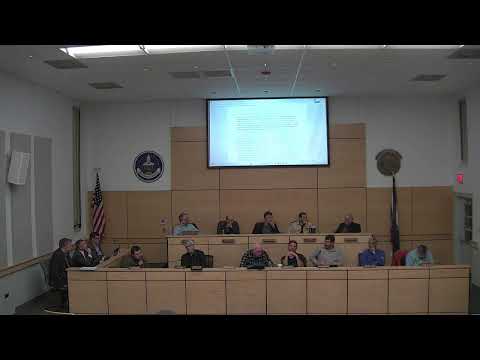
Planning commission recommends goat limit for 1.19‑acre R‑1 lot; Board of Supervisors approves SUP with different conditions
Summary
The Madison County Planning Commission recommended approval of Gerald Fuchs’ special‑use permit to keep livestock on a 1.191‑acre R‑1 parcel, proposing a maximum of six goats; the Board of Supervisors later approved the permit but with different conditions, requiring VDACS compliance and making the permit run with the property owner.
The Madison County Planning Commission and Board of Supervisors considered a special‑use permit request from Gerald Fuchs to keep livestock on a 1.191‑acre R‑1 parcel at 3632 Wolftown Hood Road (tax map 46‑54B). The permit application was filed under Madison County Zoning Ordinance article 5‑2‑1, which allows livestock on lots smaller than two acres by special use permit.
At the Planning Commission public hearing, commissioners and staff debated whether the permit should include a numerical limit on goats and what scientific or agency standards should be used to set that limit. Commissioners raised grazing and stocking‑rate concerns, noting that animal‑unit guidance and well‑setback rules affect how many animals a small lot can sustain. Several commissioners said they wanted a “scientific backstop” or an established standard rather than an arbitrary figure; others said a specific cap was needed to protect neighboring properties from odor, noise and manure impacts. Planning Commissioner Whitman proposed a cap of six goats for the 1.191‑acre parcel; other commissioners suggested numbers ranging from five per acre (rounded) to as many as nine.
Gerald Fuchs, the applicant, told the commission that he currently keeps five personal goats and two on loan and described feeding and fencing practices. “We definitely give them a lot of hay,” Fuchs said, describing supplemental feeding and a fence placed well away from his well. Resident Elaine Hamill Jenkins testified in opposition, saying she moved to an R‑1 residential neighborhood and was concerned about past episodes when the property hosted larger numbers of animals and associated odors and manure.
After discussion, the Planning Commission voted by voice to recommend approval of case SUDash05Dash25Dash01 to the Board of Supervisors with a condition setting a maximum of six goats on the property.
When the Board of Supervisors took up the case, the applicant said he would be in compliance by Saturday. Board members discussed enforcement practicality (including involvement by the Virginia Department of Agriculture and Consumer Services, VDACS, and county animal control) and whether the permit should run with the property or be personal to the permit holder. On a 4–1 vote the Board approved case SUDash05Dash25Dash01 with two specified conditions: that livestock kept on the property must comply with VDACS requirements and that the special‑use permit be tied to the property owner (the SUP ‘goes with the property owner’). The Board’s motion did not include the Planning Commission’s numeric cap of six goats; commissioners and supervisors noted enforcement challenges and the possibility that VDACS or animal‑welfare calls would prompt compliance reviews.
The Planning Commission and several supervisors said they expect further work on the county’s livestock and small‑lot rules during upcoming workshops and ordinance revisions.