Get AI Briefings, Transcripts & Alerts on Local & National Government Meetings — Forever.
Consultants outline options and costs for regional rural water district amid local interest
Loading...
Summary
Consultants from AE2S and legal counsel briefed the Koochiching County Board on forming rural/regional water districts under Minnesota Statute 116A, citing water-quality problems, aging infrastructure and funding options. Commissioners asked about assessments, connection costs and next steps for public outreach and phased planning.
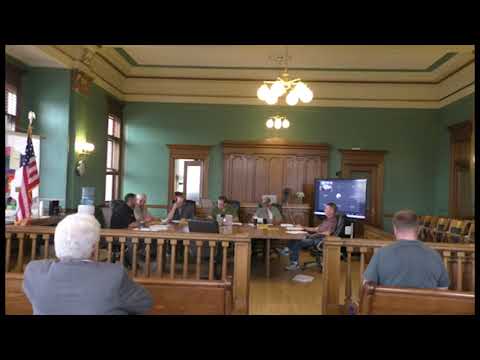
An informational presentation to the Koochiching County Board of Commissioners on Aug. 12 outlined how a county-led rural or regional water district could be formed and funded, and what residents might expect if the county pursues a countywide or multijurisdictional system.
AE2S mechanical engineer Cody Bartholomew, rural‑water specialist Steven Slick and attorney Dan Marks described how districts created under Minnesota Statute 116A can centralize treatment, pipelines and pumping to address water-quality problems such as arsenic, manganese and emerging contaminants. "When you have a centralized water source like this, we want to make sure it's compliant with all state, federal standards," Bartholomew said during the presentation.
The consultants said districts typically spread operation-and-maintenance and capital costs across a broader customer base and may use a mix of USDA low‑interest loans, state grants and federal earmarks to reduce the cost to individual users. They described several governance options for a district board and noted the process generally includes a preliminary survey, public hearing, a more detailed engineering survey and a final hearing before construction is ordered.
Why it matters: Commissioners said parts of Koochiching County rely heavily on private wells and hauled water and face reliability and quantity issues during drought or winter freezes. County leaders viewed a regional approach as a way to protect long‑term water quality and improve resilience for residents and agricultural users.
Key details: - Process: County initiates formation (resolution), hires an engineer to perform a preliminary survey, holds public hearings, orders a more detailed survey if warranted, and then orders construction and appoints a district commission as prescribed in Statute 116A. - Funding: Presenters recommended assembling grants and federal earmarks where possible; typical per‑customer charges vary widely, with base monthly rates the presenters said they had seen in the region ranging roughly $40–$80 plus a volumetric charge (about $4–$8 per 1,000 gallons), and one‑time membership fees varying from a few thousand up to $10,000 depending on how costs are allocated. - Assessments: The presenters said districts can structure costs so only customers who opt to connect pay front‑end costs, or they can use an assessment model that spreads some costs across all properties in the service territory. The consultants said voluntary, user‑driven hookups have been more common and more politically viable in the region.
Board reaction and next steps: Commissioners asked about likely construction phasing, local engineering needs and whether the county should start with targeted outreach. The consultants recommended an initial public‑outreach phase—mailings and public meetings—followed by a preliminary survey if local interest is sufficient. The board did not take formal action; the presentation was informational.
Speakers - Cody Bartholomew, Mechanical Engineer, AE2S (presenter) - Steven Slick, Rural Water Specialist, AE2S (presenter) - Dan Marks, Attorney, Valerty & Cooley (presenter) - Commissioner McIntyre (board)
Authorities - statute: Minnesota Statute 116A (referenced by presenters as the statutory process for formation of water districts). Referenced_by:["rural-water-informational"]
Proper_names:[{"name":"AE2S","type":"business"},{"name":"Valerty & Cooley","type":"business"},{"name":"Minnesota","type":"other"}]
Provenance.transcript_segments:[{"block_id":"992.74506","local_start":0,"local_end":120,"evidence_excerpt":"Alright. Commissioners, good morning. Thank you for allowing us to present to the board today. Officially, this is a informational session regarding rural water systems...","tc_start":"00:16:32","reason_code":"topicintro"},{"block_id":"3444.99","local_start":0,"local_end":120,"evidence_excerpt":"...So other than that, I know I kept you probably longer than, probably longer than we were slotted for. So we we appreciate your time. And, if you have any questions, feel free to let us know...","tc_start":"00:57:24","reason_code":"topicfinish"}]
Salience.overall:0.78