Get Full Government Meeting Transcripts, Videos, & Alerts Forever!
Get email alerts on the Corporal Punishment topic
No spam. Unsubscribe anytime.
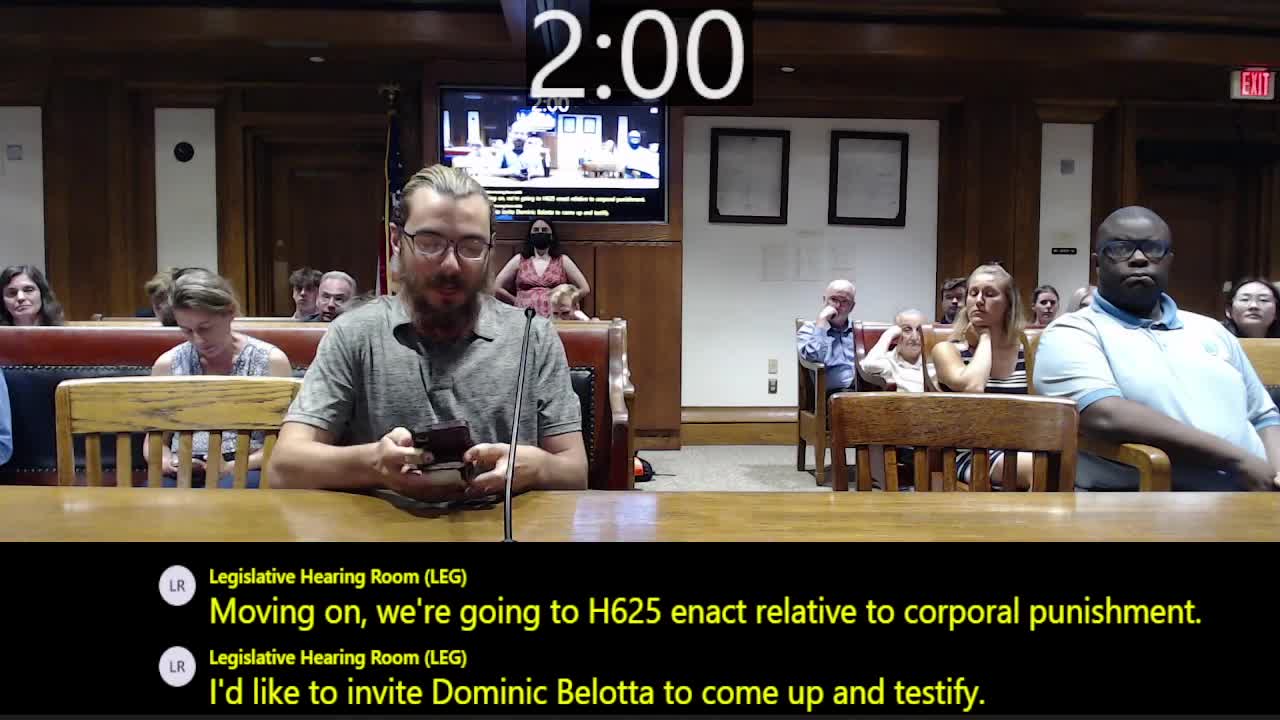
Experts tell committee to ban corporal punishment in private schools; H625 backed by researchers and advocates
Summary
Researchers and advocates urged the Joint Committee on Education to extend Massachusetts' public‑school ban on corporal punishment to private schools through H625, citing studies that link hitting children in schools to injury, worse academic outcomes and disproportionate use against Black students and students with disabilities.
Don Balota, an advocate, and researchers including Dr. George Holden and Dr. Elizabeth Gershoff testified in support of H625, which would ban corporal punishment in private schools in Massachusetts. Dr. Gershoff summarized decades of research and said school corporal punishment commonly involves objects such as paddles and is associated with injuries and poorer academic outcomes. Dr. Holden and others described evidence linking corporal punishment to increased aggression and mental‑health problems.
Witnesses said the commonwealth already banned corporal punishment in public schools and urged the committee to extend the same protection to students in private institutions. They noted professional organizations — including the American Academy of Pediatrics and American Psychological Association — oppose corporal punishment in schools and recommended alternatives that emphasize nonviolent, evidence‑based discipline.
No vote was taken during the hearing; witnesses said they would submit written testimony with references and peer‑reviewed studies.
Sources: Don Balota; Dr. George Holden; Dr. Elizabeth Gershoff.