
Board approves administrative reasonable‑accommodation procedure for persons with disabilities
Get AI-powered insights, summaries, and transcripts
Subscribe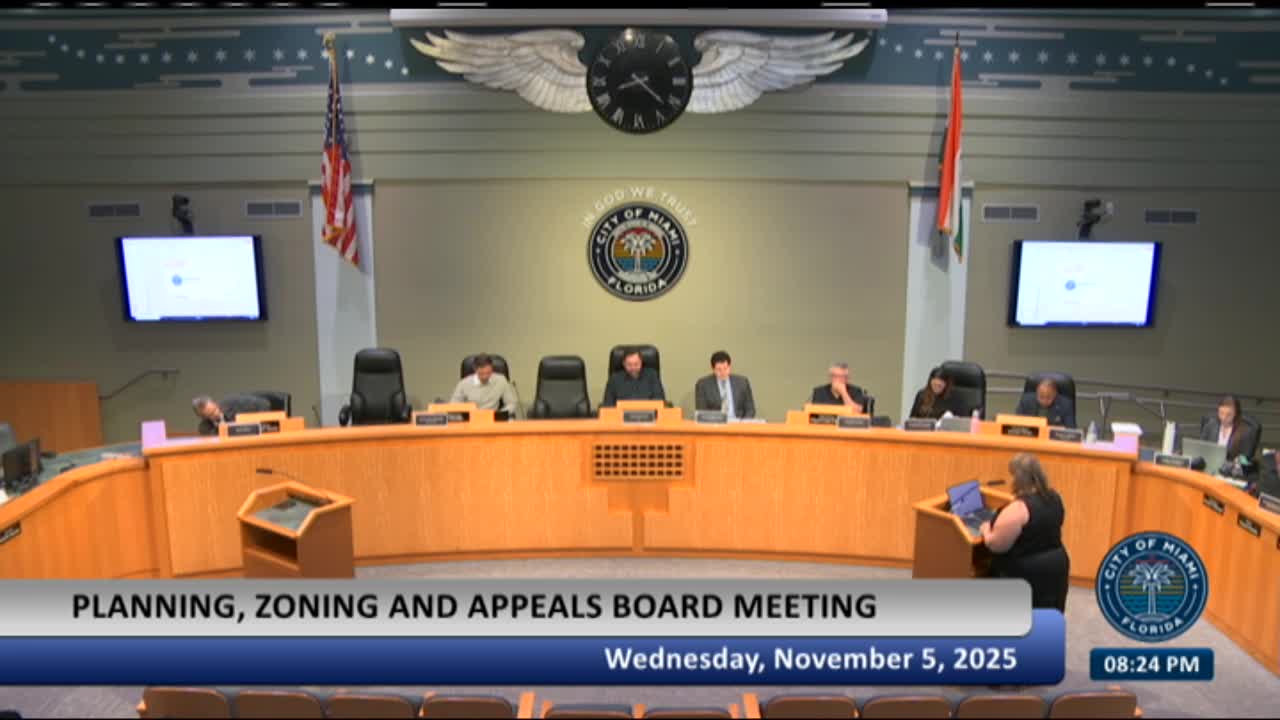
Summary
The board approved a city ordinance establishing an administrative reasonable‑accommodation process to implement federal and state non‑discrimination requirements (including certified recovery residences), defining application requirements, five approval criteria, and an appeal pathway to the city manager.
The Planning, Zoning & Appeals Board voted unanimously to recommend a city ordinance creating a formal, administrative reasonable‑accommodation process for persons with disabilities. Planning staff framed the text as implementing the Fair Housing Act and the Americans with Disabilities Act (ADA), and as responsive to new state requirements for certified recovery residences (citing Florida SB 954). The ordinance establishes a distinct application type and administrative review by the planning director and zoning administrator; applicants may then appeal a denial to the city manager.
Savannah Steiner (assistant director, planning department) said the procedure goes beyond the minimum state requirement for certified recovery residences to create a general mechanism for requests to waive or modify land‑use regulations where a nexus exists between the applicant’s disability and the requested accommodation. The application requires the applicant’s identifying information, a description of the disability, the specific regulation to be waived and the relationship between the disability and the requested relief. Staff will determine completeness and may request additional documentation.
The ordinance sets five review criteria: whether the applicant meets the statutory definition of disability, whether an identifiable relationship exists between the condition and the requested accommodation, whether reasonable alternatives exist, whether granting the request would change the essential nature of the zoning code, and whether the request would impose undue financial or administrative burdens on the city. The city’s administrative decision may approve, approve with conditions, or deny; a denial or dispute may be appealed to the city manager.
Staff and board members discussed typical example cases (sober‑living homes, ramps, and pools for persons with disabilities) and how the accommodation runs with the person, not the property; if the original beneficiary leaves, future occupants must reapply or the accommodation becomes nonconforming. The board adopted the ordinance by a 7–0 roll call vote.