
Supreme Court of Texas hears arguments on utility easement scope and modernization
Get AI-powered insights, summaries, and transcripts
Subscribe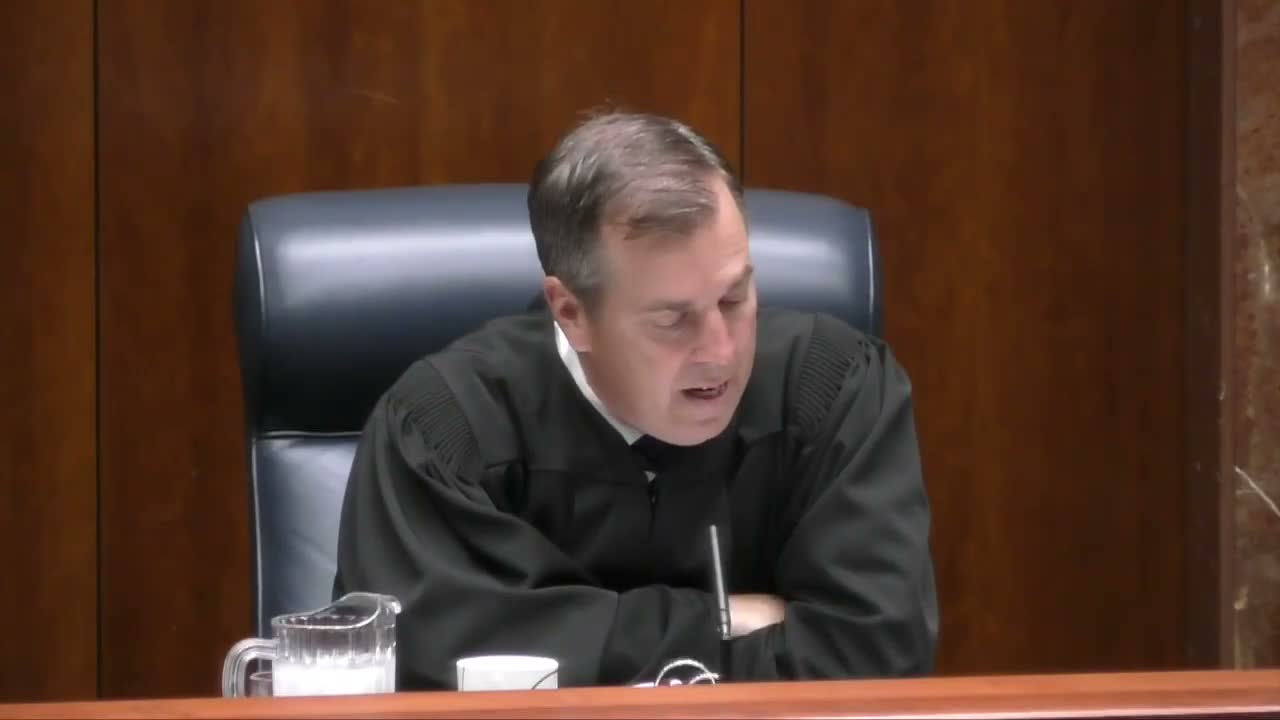
Summary
The court heard two cases over whether utilities may modernize or change the intensity of use of a decades-old power-line easement without an express expansion. Counsel and justices debated Restatement authority, the need for limiting principles to protect small-property owners, and factual questions about surveys and reliance.
The Supreme Court of Texas heard oral argument in two easement cases that asked whether a utility may modernize power lines and increase the intensity of use under an easement established in 1947 without express expansion. Speaker 1, Counsel, told the court the cases include Warr State v. Reno Grande Electric Quadrant (from McKinney County in the fourth court of appeals) and Braxton Minerals v. Battle (case number 240438, from Tarrant County in the second court of appeals), and that “the court's allotted 20 minutes to each side of each of the cases.”
Speaker 2, Justice, framed the central policy tension: “competing at least 2 competing policy concerns here. And 1 is that, you know, we wanna encourage electric companies to to to keep things safer with water technology, to make things more efficient, to to to make sure that whatever's out there in this particular situation, these these electric these electric fields, etcetera. On the other hand, we wanted to do it in the least intrusive manner possible.” The justice pressed whether those goals are reconcilable; counsel replied, “It's not,” in a short exchange recorded in the argument.
Counsel for the utility side argued the Restatement of servitudes supports some modernization tied to the easement’s original purpose. Speaker 1 said the Restatement (referred to in argument as the "restatement third of section 2 servitude") reflects the legislature’s balancing of public need and utility costs, and urged the court that the easement holder may perform ordinary updates “to satisfy the easement's purpose, which is to feed this line went in in 1947 to feed a larger power grid.” Counsel cited flexibility in use over time and relied on case law including Marcus Cable v. Krem to support the position that manner, frequency and intensity of use may change with technology.
Several justices pressed for a limiting principle to prevent unbounded expansions of easement rights. One justice posed the hypothetical of a utility seeking to expand into “a backyard” versus thousands of acres and asked where a limiting principle would come from; counsel acknowledged the need for limits but argued that reasonable modernization tied to the easement’s purpose should be permitted. The court questioned whether surveys and recorded documents clearly define scope: “What does the survey say about the scope of the easement?” one justice asked, and the record’s specificity was a point of contention during argument.
Counsel also discussed constructive notice and reliance: counsel said that when a power line was present and later acknowledged or rebuilt after a break, that factual history can bear on creation and scope. Arguments noted specific historical dates cited in the record (1947 and 2012) and disputed whether the documentary record contains a limiting instrument or express scope language.
The court did not announce a ruling at the conclusion of the argument and provided no decision date. The transcript indicates the justices explored doctrinal sources (Restatement provisions and appellate decisions) and practical limits (surveys, the original route, and potential impacts on small parcels), leaving factual record questions and the precise legal standard for modernizing within an easement as central unresolved issues for the court to decide.