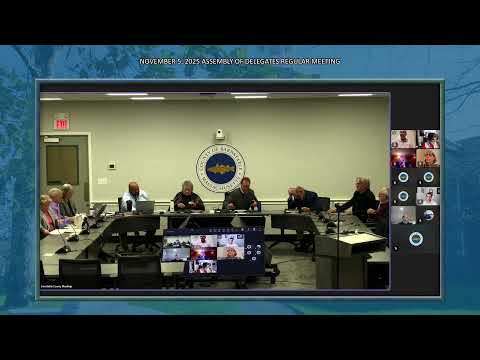
Delegates review draft transfer-fee framework; committee urges town consultations and more analysis
Loading...
Summary
The Economic Affairs Committee presented a draft transfer-fee framework that would allow towns to voluntarily adopt a real-estate transfer fee, with most revenue returning to the towns and the registry of deeds collecting the fee.
The Assembly of Delegates heard a report from the Economic Affairs Committee on a draft transfer-fee framework intended to support attainable housing across Cape Cod.
Delegate Harder, chair of the committee, summarized work to date: the framework outlines a home-rule petition that would allow towns to voluntarily adopt a real-estate transfer fee, with the registry of deeds collecting the fee and "nearly all" revenue returned to the adopting towns. The draft reserves up to 10% of total proceeds for administrative and regional purposes; the committee emphasized maintaining town-level flexibility and completing additional cost and revenue analysis in consultation with the registry and the county administrator.
Why it matters: committee members and several delegates said that any transfer-fee proposal must be integrated with environmental protections and wastewater planning and be responsive to town-level priorities. Sponsors urged delegates to take the draft framework to their towns for comment, submit written questions to the committee, and participate in further drafting so that a final home-rule petition can be prepared.
Details and outstanding questions: the committee flagged the need for more analysis on projected revenues, how regional funds would be administered equitably, and whether the administrative share should be a fixed percentage. Delegates asked for clarity about whether fees would be tax-deductible and about sunset or renewal provisions; the committee described the draft as an initial framework, not a final petition.
Next steps: the committee will collect feedback from towns and stakeholders, refine the framework and return with a proposed home-rule petition only after further analysis and town input. Delegates were encouraged to submit written questions to the committee and to request committee members visit towns for briefings.
Sources: Economic Affairs Committee report read by Delegate Harder and subsequent floor discussion by delegates including Deputy Speaker Gessen and Delegates Wyman Colombo, Sampson and Frederickson.