Get AI Briefings, Transcripts & Alerts on Local & National Government Meetings — Forever.
Lebanon City presents 2026 budget proposal with no tax increase; revenues, fees and major costs highlighted
Loading...
Summary
City staff proposed a $15.24 million general fund budget for fiscal 2026, maintaining the current 4.581-mill rate while projecting higher earned income and enabling-tax receipts, new rental-licensing and reinspection fees, a $200,000 transfer for Staver's Dam work and rising health and pension costs.
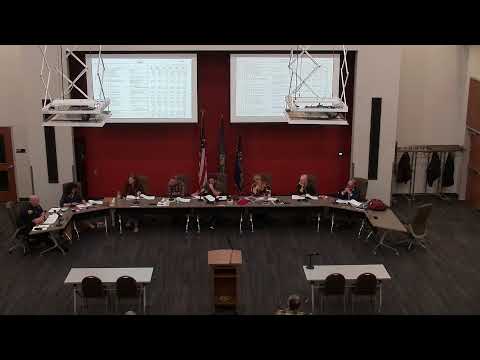
Lebanon City officials presented the proposed 2026 general fund budget in an initial public hearing, proposing total revenues of $15,235,353 and no increase to the current 4.581 mills. The city describes the proposal as the eleventh straight year with no tax increase.
The presentation, delivered by the city’s finance lead (name not specified), said assessed value totaled about $875 million in 2025 and rose roughly $4.36 million from September 2024 to September 2025; at current collection rates that change would increase real estate tax revenue by under $20,000, leaving the real estate tax line at $3,920,078 (about $2,049 less than the prior year). "For the owner of a property with an average assessed value of $104,636, they would pay to the city $479," the presenter said.
The draft budget relies on several other revenue adjustments: a projected $7.1 million in earned income tax (an increase of $800,000, or about 12%), a $5,000 increase to local services tax receipts to $385,000, and a $145,000 uptick in real estate transfer taxes over 2025 estimates. Total enabling-tax revenue is budgeted at $8,092,016, up about $952,250 (13.3%).
Council was presented with proposed fee changes intended to offset operating costs. The rental-property licensing fee would rise from $40 to $60 per unit and rooming-house fees from $20 to $30 per room; staff estimates this would yield roughly $140,000 more than in 2025. The council was told the new rental-license fees are within the range charged by nearby municipalities.
The council also was shown a new fee schedule for fire safety reinspections. The city will not charge for initial inspections but will assess fees for repeat reinspections: $100 for the first reinspection, $200 for the second and $300 for the third; staff budgeted $20,000 for these reinspection fees in 2026.
On capital and transfers, the budget proposes a $200,000 transfer from capital reserves to help pay for a Staver's Dam improvement project; the presenter said larger dam-improvement contracting and related work increases several line items under culture and recreation and contracted services.
On intergovernmental revenue, staff highlighted a significant cut in Act 120 police-academy reimbursement: the presenter said the state now budgets $1,282 per cadet (tuition and education hours), a steep drop from prior years that had covered a much larger share of academy costs. Pension state aid also is projected to fall because the city expects a reduced number of eligible units in police and nonuniform personnel for the 2026 aid calculation.
expense pressures identified by staff include a planned increase in the medical-accrual per eligible employee from $19,400 to $21,000, a roughly 8.25% rise, and a 4% pay increase proposed for non‑bargaining employees. The city said contract negotiations are largely settled: AFSCME has a new contract, a verbal agreement exists with the Fraternal Order of Police, and fire negotiations remain outstanding.
The hearing did not include final council votes on the budget. The chair moved to pause the session and continue the hearing at the next scheduled budget session to allow additional review and time for council questions.