BEAD update: Texas BDO reports provisional BEAD awards led by cost‑priority rule; members press on Laredo, Medina pole fees
Loading...
Summary
The Texas Broadband Development Office told the House Committee on State Affairs that provisional BEAD awards reflect NTIA’s technology‑neutral, cost‑priority guidance and that the current award mix is roughly 51% fiber, 27% LEO satellite and 22% fixed wireless.
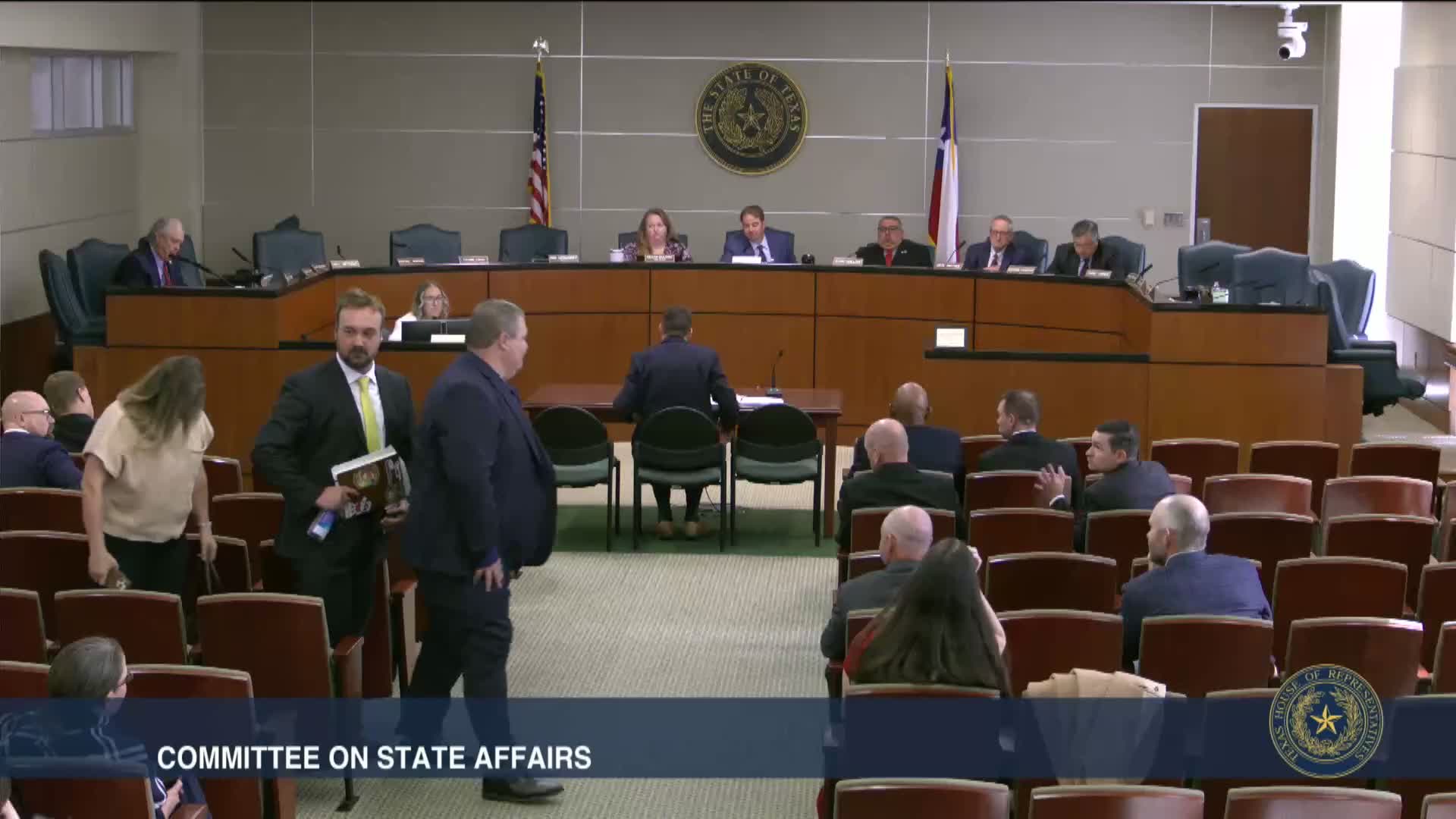
The Texas Broadband Development Office updated the House Committee on State Affairs on Nov. 7 about the state’s implementation of the Broadband Equity, Access and Deployment (BEAD) program and related broadband initiatives.
BDO director Bridal Clayton said federal guidance issued by the National Telecommunications and Information Administration required states to be technology‑neutral and to prioritize awards that lower total BEAD funding in each project area. The BDO revised its Notice of Funding Available accordingly and received over 4,500 applications, averaging roughly six bids per project area.
Preliminary award mix and process: Clayton said the BDO submitted a draft plan to NTIA on Oct. 27 and that provisional awards, pending final federal approval, would serve an estimated mix of project locations: about 51% fiber, 27% LEO satellite and 22% fixed wireless under the cost‑priority scoring. Clayton emphasized that the solicitation remains an active and competitive process and that details will be finalized through NTIA review.
Other programs: Clayton also briefed the committee on the BOOT program (Bringing Online Opportunities to Texas), which targeted 24 largely rural counties and carried $80,000‑plus location goals (BOOT awards were intended to connect roughly 80,000 locations and are expected to finish by 2026), and a $200,000,000 middle‑mile NOFA closing Nov. 20, which includes an incentive to add flood‑monitoring capacity to fiber projects.
Members’ concerns: Representatives asked for zoomed maps for larger urban areas and pressed officials about Laredo and other places that appear on the BEAD map to have limited fiber bids. Several members asked whether LEO satellite awards provide reliable service in flood or storm conditions; Clayton said BDO’s technical reviews require projects to meet minimum service metrics (100/20 Mbps and low latency) and that LEO awards in the provisional list met those thresholds. Members asked about alternatives and asked for a written follow‑up on service reliability comparisons.
Pole attachment fees and Medina County: Committee members raised a specific local concern. Agencies and witnesses reported that a provisional award in Medina County collapsed after the bidder discovered unexpectedly high pole‑attachment fees from local utility owners and requested additional funds; the BDO put those monies back into the broadband infrastructure fund when the provisional award could not be adjusted through the competitive process. Witnesses and staff said pole‑attachment costs are among several site‑specific barriers that can change project economics and that BDO will follow up to describe the frequency and scale of such issues.
What the committee asked for: Members asked the BDO to provide detailed, zoomed maps for urbanized project areas (e.g., Laredo), a list of provisional awards by technology, and written follow‑up on the Medina County pole‑attachment issue, including whether statutory changes or other policy fixes could ease deployment in areas with high attachment costs.
Ending note: BDO said the BEAD process continues under federal review and that the agency will pursue statutory or policy options if needed to deliver robust, resilient broadband to vulnerable and high‑risk communities.