Contractors tell Texas committee contracting buys readiness; agencies warn ownership needs sustained operations funding
Loading...
Summary
A panel of aerial firefighting contractors and industry groups told the committee that exclusive‑use contracting provides faster, lower‑risk access to aircraft and crews, while state officials said ownership is feasible only with multi‑year planning and operations funding.
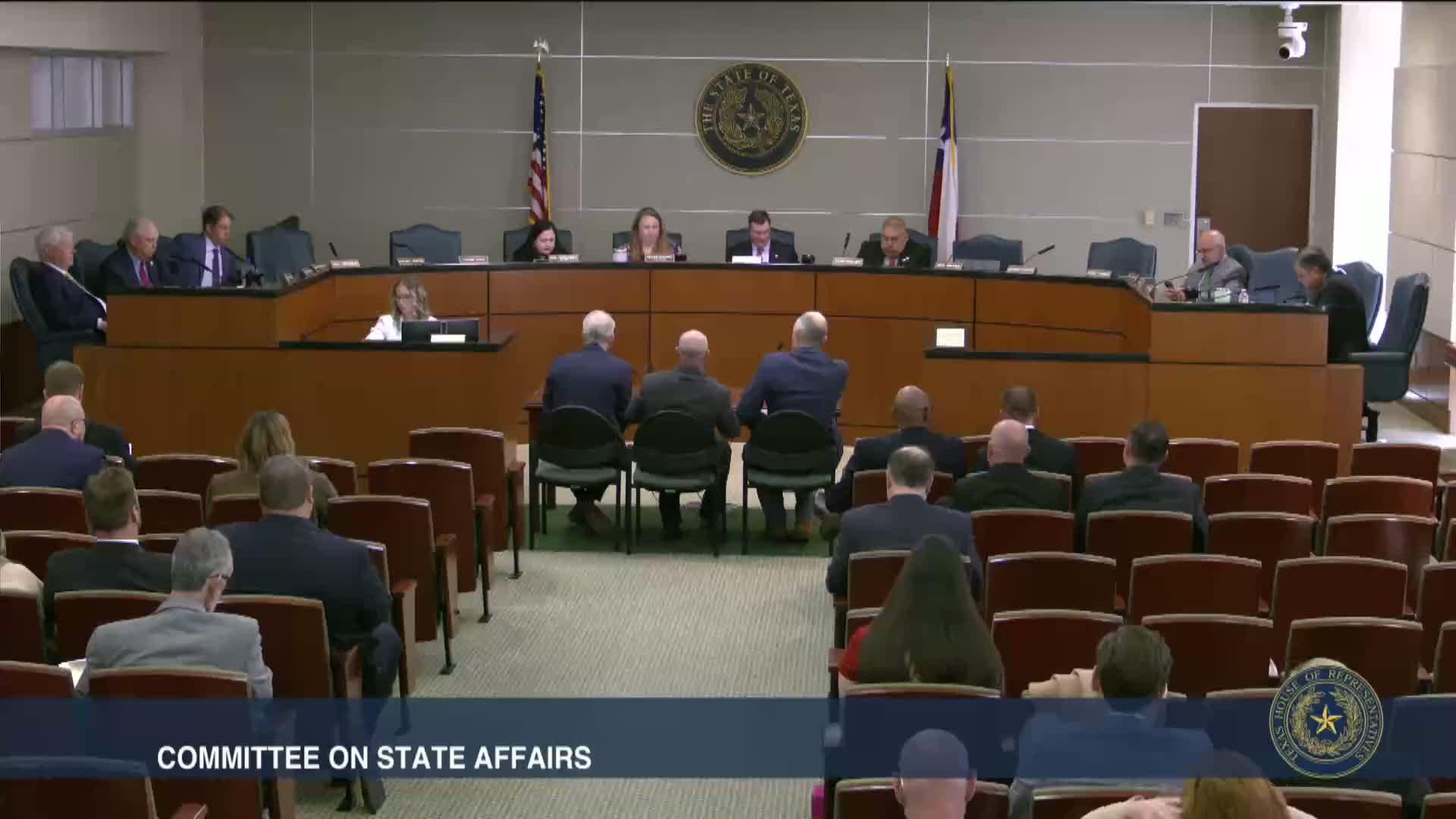
Industry witnesses testifying to the House Committee on State Affairs on Nov. 7 urged Texas to rely on exclusive‑use contracting for near‑term aviation readiness while the Forest Service proceeds with longer‑term procurement.
Chris Neiman, president of Aeroflight, described conversion and training capabilities for large air tankers and said the agencies’ RFPs are written with minimum specs that allow vendors to propose different platforms. “The RFP does provide flexibility and there’s a specific part of the RFP that asks vendors to talk about other capabilities that the aircraft may have that Texas did not ask for,” Neiman said.
Contractor perspective: Multiple contractors explained the tradeoffs. Brett Lesperance, CEO of Dauntless Air, said contracting purchases a service package—aircraft, pilots, mechanics, training, insurance and ground support—so the state pays for assured availability rather than taking on long‑term operating risk. “Exclusive use contracting allows Texas to buy availability, readiness, and rapid response without building a costly permanent aviation bureaucracy,” he told members.
Bridger Aerospace’s Sam Davis described Bridger’s mix of scoopers and multi‑mission aircraft and said that guaranteed, multi‑year contracts enable operators to invest in parts inventories, training and simulations that sustain high uptime. Industry witnesses said ownership carries significant recurring costs—insurance, spare parts, pilot staffing and maintenance—that frequently exceed the initial purchase price over several years.
Local operators and tactics: Volunteer and local pilots urged starting with smaller, low‑maintenance platforms that can reach rural runways and perform night‑capable missions. Jason Abraham, a volunteer helicopter pilot, advocated for a single‑platform helicopter fleet (Bell 412 or similar) with snorkel capability and night‑vision to fight fires overnight and remain on scene.
Standards and safety: Paul Peterson of the United Aerial Firefighter Association recommended clear program management, sustained legislative funding, and contractual performance standards (including uptime and replacement obligations) if the state uses exclusive‑use or government‑owned/contractor‑operated models.
What the agencies say: Forest Service and TDEM witnesses said they want aircraft under Texas control but cautioned that ownership alone does not guarantee availability unless pilots and maintenance staff are funded and hired. Deputy director Wes Morehead said delivery timelines can range from 12 months to four years, reinforcing the case for interim contracted capacity.
Bottom line: Industry witnesses argued exclusive‑use contracting is the quickest path to reliable aircraft and crews in‑state; agency leaders and many committee members said a hybrid approach—owned multi‑mission aircraft with contracted suppression capability and immediate exclusive‑use contracts—merits serious consideration.