Get Full Government Meeting Transcripts, Videos, & Alerts Forever!
Get email alerts on the Wildfire Response topic
No spam. Unsubscribe anytime.
Texas officials outline expanded wildfire response plans as debate continues over aircraft purchases vs. contracts
Summary
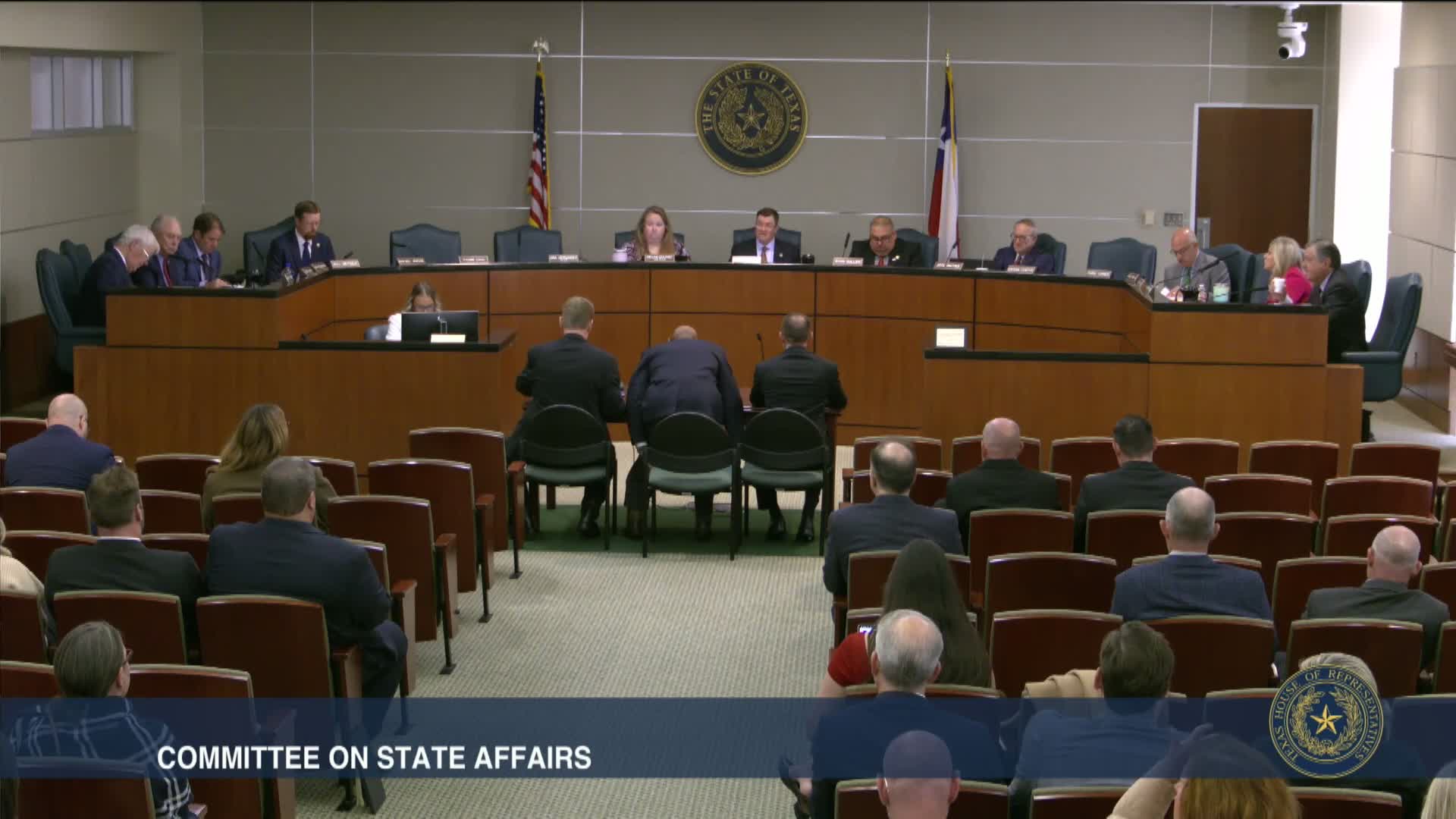
State officials told the Texas House Committee on State Affairs on Nov. 7 that the state has bolstered wildfire readiness but still faces critical gaps in aircraft availability and interoperability.
State officials told the Texas House Committee on State Affairs on Nov. 7 that the state has bolstered wildfire readiness but still faces critical gaps in aircraft availability and interoperability.
The committee heard from Nim Kidd, chief of the Texas Division of Emergency Management, and Al Davis, director of the Texas A&M Forest Service, who said the state has supported local governments through mutual aid and deployed both ground and aviation assets this year. “State assets have responded to 693 fires since January 1,” Kidd said, adding that statewide response costs are estimated at about $114,000,000 and that most aircraft working fires are contracted, not state‑owned.
Why it matters: Lawmakers pressed agencies for a short‑term fix while the Forest Service executes a multi‑year procurement. The Forest Service said it was appropriated $257,000,000 for purchase, operation and maintenance of wildfire aircraft and has posted four RFPs for new multi‑mission airplanes, used multi‑mission aircraft, large air tankers and helicopters.
The agencies described the current posture. Davis said preparedness was raised to Level 3 and that 136 counties had active burn bans; he reported roughly 370 wildland firefighters and 147 support personnel under the Forest Service’s count, and said air assets in elevated periods reached about 40 aircraft. Davis said aviation planning has been guided by an aviation task force made up of 12 partner organizations and that procurement decisions will depend on what proposals meet the agency’s minimum specifications and price expectations.
A central divide at the hearing was whether to use exclusive‑use contracting to ensure aircraft stay in Texas or to rely on the federal resource pool. Kidd and Morehead described practical limits to the federal system: aircraft contracting through federal channels can be reassigned out of state and take days to deploy. “If you own the resources, they don’t go anywhere,” said a private operator testifying for several states’ experience; in contrast, agency witnesses emphasized the state’s need to keep assets available while new purchases are received.
Procurement timing and interim options: Deputy director Wes Morehead told members that delivery estimates from industry run from about 12 months to as much as four years depending on platform type. That timeline tightened focus on interim measures: officials described prepositioning single‑engine air tankers and scooper aircraft in the Panhandle and working through emergency contracting via the governor’s office when disaster authorities are activated.
Local resilience and volunteer fire departments: Committee members repeatedly emphasized the role of volunteer fire departments (VFDs). Davis and Morehead described a near‑historic VFD funding package from the last session: $192,000,000 in appropriations for apparatus and PPE, with $164,000,000 already awarded to purchase 558 fire trucks and 321 slip‑on units. The Forest Service is rolling out an equipment database to catalog assets available to communities.
Ground equipment and equipment safety: Members pressed agencies about heavy equipment for rural response. The Forest Service said it has more than 100 bulldozers in its toolbox and has added motor graders—six staged in the Panhandle—that are lighter on the land. Officials acknowledged a continuing problem with modern engine electronics and emissions systems that can put engines into low‑power modes; manufacturers are working on overrides and designs to keep operators safe.
What lawmakers asked for: Committee members asked agencies to pursue near‑term exclusive‑use contracting or other means to have aircraft effectively under state control while the procurement process runs its course. Several members stressed that the legislature’s intent was to put aircraft into service quickly and emphasized they want practical, on‑the‑ground availability rather than a procurement doctrinal debate.
Where the record is limited: Agencies repeatedly cautioned that large purchases depend on what proposals arrive and that the final fleet mix will be determined after evaluation of responses to the posted RFPs. Officials also stressed that ownership alone will not solve personnel and maintenance needs; pilots and mechanics must be trained, credentialed and funded.
What comes next: Agency staff said they will continue briefings to the committee, and members signaled they will press for options that can be implemented before new airframes arrive.
Ending note: The committee’s debate centered less on whether to increase aviation capability and more on how to ensure that capability is actually present and controlled in‑state when a major fire starts rather than waiting on federal reassignment or long delivery time frames.