Get Full Government Meeting Transcripts, Videos, & Alerts Forever!
Get email alerts on the County Budget topic
No spam. Unsubscribe anytime.
Cumberland County says FY26 first-quarter spending is on track, flags IT and maintenance timing issues
Summary
County finance staff told commissioners FY26 first-quarter spending was generally on track at 23.3% of the year, while noting IT timing issues and a large encumbrance for computer hardware that affected line-item percentages.
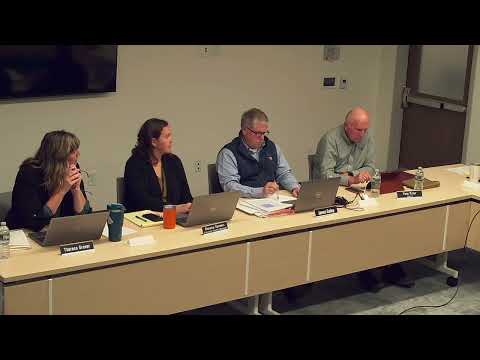
Finance Director Teresa Grover briefed commissioners on the county's FY26 first-quarter budget position.
Grover reported the county closed the first quarter at 23.3% of the fiscal year spending (the target is 25%). She identified several timing- and encumbrance-driven variances: an IT professional-services line at 135.6% because a mandatory GIS server upgrade required vendor scheduling that pushed expenses into the current fiscal year; a $370,000 encumbrance for computer hardware entered as a multiyear purchase-order that made a 0% budget line look overspent; and a garage-structure expense related to an earlier accident that will be reimbursed through the county's risk pool. Maintenance-contract lines were high because many annual contracts are paid at the start of the year. On the revenue side, supervision fees were above target (32.3%) after credit-card processing was added, deeds transfer tax was strong (42.6% of expected), and photocopy revenue fell to 9.3% of the target (state statutory change restricting copy charges noted).
Commissioners asked about the budget implications of the encumbrance and whether quarterly seasonality would affect items such as copying revenue; staff said the encumbrance has not been spent and will be adjusted and that the copying decline may be attributable to providers moving online in advance of a statutory change effective Jan. 1, 2026. Grover and commissioners agreed to monitor trends and report back during the year.