Get Full Government Meeting Transcripts, Videos, & Alerts Forever!
Get email alerts on the Industrial Siting topic
No spam. Unsubscribe anytime.
Industrial siting and wildlife mitigation prompt split testimony; committee treats draft as informational
Summary
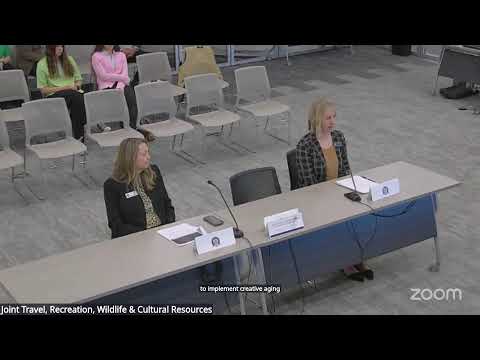
An informational bill draft proposing payments by industrial siting applicants to wildlife entities drew split testimony on Nov. 6: industry warned of costs and uncertainty, while conservation groups urged a tiered, location-sensitive approach to protect critical habitat.
Committee members used a draft sponsored by an individual senator as a learning exercise on whether industrial siting applicants should be required or allowed to make payments to state wildlife entities to address unmitigated impacts.
What the staff draft proposes: The draft (26 LSO 28, 0.53) would allow Game and Fish and the Wyoming Wildlife and Natural Resource Trust Board to seek payments from industrial siting applicants to address unmitigated wildlife impacts. Under current law, industrial-siting impact assistance payments are distributed from a portion of the state’s sales-and-use tax to local governments for defined unmitigated local impacts (public safety, roads, law enforcement and utilities). The draft would create a voluntary or negotiated pathway for project proponents to address wildlife impacts through agreements with state wildlife entities, or to have the issue considered by the Industrial Siting Council as part of the permit process.
How the existing process works: Department of Environmental Quality Director Todd Parfit and Industrial Siting Administrator Jenny Stabin explained that the Industrial Siting Act requires a jurisdictional application for large projects (construction-cost threshold indexed to about $290,400,000; wind projects become jurisdictional at 20 turbines; solar at more than 30 megawatts or disturbance of more than 100 surface acres). The statute requires the applicant to include studies and proposals to alleviate impacts to terrestrial and aquatic wildlife. The Industrial Siting Division notifies listed state agencies (19 agencies, including Game and Fish) and agencies must return recommendations and requested permit conditions within 60 days. The council issues or denies permits and its decisions are appealable to district court.
Stakeholder positions: Industry groups, including Powering Up Wyoming and representatives of mineral and trona interests, urged caution. They said Wyoming’s permitting process is already lengthy and costly — typical industrial-siting applications often run into the millions for studies and preparation — and warned that a statutory mechanism that allows agencies to seek additional payments would increase uncertainty and could drive projects away. Counsel for a developer noted average industrial-siting application costs of $3–4 million and said operating margins on projects are often in the single digits, so additional costs can be decisive.
Conservation groups and hunting advocates asked for mechanisms to steer projects away from ‘‘high-conflict’’ areas and to provide a predictable, tiered approach to mitigation costs so applicants know upfront what costs to expect. The Nature Conservancy recommended giving Game and Fish rulemaking authority to assess fees that vary by impact level and location (a tiered system similar to existing sage‑grouse practices).
Department and agency view: DEQ described the council process, the 60-day inter-agency comment window, and the council’s authority to incorporate permit conditions based on agency recommendations. Game and Fish staff said early engagement and negotiated agreements with applicants currently happen and that the existing process allows agencies to raise new adverse impacts through amendment or at a subsequent council meeting.
Committee disposition: Committee members said the topic requires more study and stakeholder work. The draft was presented for education; the committee did not take action to sponsor the draft at this meeting. Members requested continued discussion in the interim so the legislature can weigh the trade-offs between regulatory certainty and wildlife protections.
Attribution: Summaries drawn from testimony by Todd Parfit (DEQ), Jenny Stabin (Industrial Siting administrator), Angie Bruce (Wyoming Game and Fish), industry representatives (Powering Up Wyoming, trona industry) and conservation witnesses including the Nature Conservancy and Wyoming Wildlife Federation.