Get Full Government Meeting Transcripts, Videos, & Alerts Forever!
Get email alerts on the Arts And Culture topic
No spam. Unsubscribe anytime.
Columbus Recreation and Parks displays youth work and training across city centers
Summary
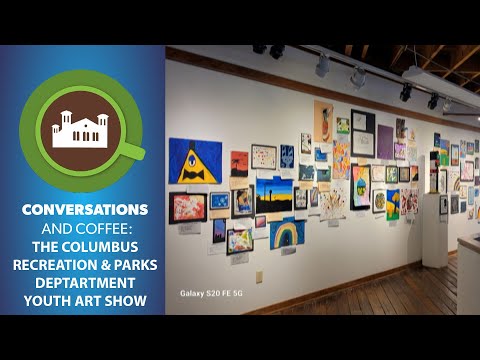
Columbus Recreation and Parks Department opened a youth art exhibition Nov. 6 at the Priscilla R. Tyson Cultural Arts Center, showcasing work from preschoolers through seniors and describing a two‑year effort to make arts training available across the department’s 29 community centers.
Columbus Recreation and Parks Department opened a youth art exhibition Nov. 6 at the Priscilla R. Tyson Cultural Arts Center, showcasing work from preschoolers through seniors and describing a two‑year effort to make arts training available across the department’s 29 community centers.
The exhibit features mixed media projects, recycled‑material works from the We Go Green program, fused glass trinket dishes made by preschoolers, cyanotype (sun‑exposed) prints and a large collaborative portrait created by participants in the Girls Empowerment program.
Tish Gautner, center manager at Tuttle Park Community Center and chair of the department art committee, said the committee re‑formed after the pandemic and set two main goals: “training other centers that might be, making sure that all the training is available to teach art to people of all ages in their community centers,” and “to showcase all the artwork that all the amazing people of all ages make in our community centers.”
Heather Corson, who directs the Great Art Getaway summer camp, described an annual recycled “rethink and recreate” project that supplies campers with found materials and discarded electronics to build sculptures and installations. “Those kids, I feel like they teach me more than I teach them,” Corson said, describing students who attend from diverse backgrounds including refugees and children experiencing homelessness.
Caitlin Welke, center manager at Lizotte Woods Community Center, highlighted the program’s ceramics offerings and the We Go Green recycled‑butterfly project. She credited assistant staff and outside instructors for expanding summer clay clinics, youth pottery clubs and mixed‑media projects used across centers.
Whetstone Community Center assistant manager Jessica Palante described cross‑center partnerships with independent instructors and a recent plastic bottle chandelier inspired by an exhibit at Franklin Park Conservatory. “I don’t think anybody does it the way that we do of incorporating the fine arts in with recreation,” Palante said.
The exhibition also put a spotlight on longtime instructors. Bradley Van Sickle, a ceramics teacher at Tuttle Park, announced his planned retirement after more than 31 years and reflected on the strong sense of community built in his classes.
Instructors demonstrated specific techniques used in classes. Tuttle Park staff described fused glass projects for preschoolers: pieces are assembled with small glass elements, glued in place, then fired in a small kiln first at about 1,460°F and then slumped at about 1,250°F to form trinket dishes. Cyanotype (sun‑exposed) prints were explained as a UV‑reactive process that can be printed on paper or fabric, developed by exposing objects or negatives to sunlight and then rinsing in water.
Students from multiple centers presented their pieces during the opening. Callan, age 6, described a mixed‑media cupcake with pipe‑cleaner candles and decorative “cookies,” and Paige demonstrated fused glass techniques used in preschool classes. Petra, Ezra and other young artists described nature‑inspired drawings, dinosaur motifs and collaborative work begun with outdoor sketching.
Audience members asked technical questions about cyanotype materials and installation plans for the Girls Empowerment portrait. Staff said the large collaborative portrait is displayed in the gallery on a standalone wall and that a permanent installation at a community center is “to be determined.”
Department director Todd (last name not specified in the remarks) closed the program by thanking students, instructors and staff across the department’s 29 recreation centers and praising the program’s role in bringing arts opportunities to children and community members citywide.
No formal votes, agenda motions or policy actions were taken at the event; it was a program opening and public celebration of center‑led arts programming.