Get Full Government Meeting Transcripts, Videos, & Alerts Forever!
Get email alerts on the Rail Noise Quiet Zones topic
No spam. Unsubscribe anytime.
Officials say quiet‑zone mitigation for 11 crossings could cost into six figures per crossing; diagnostic report due
Summary
A town diagnostic put the cost to install quiet‑zone infrastructure at individual crossings between about $30,000 and $1,000,000, requiring joint action across towns. Officials scheduled a Dec. 17 community meeting to hear resident complaints and await a final diagnostic report before selecting mitigation options.
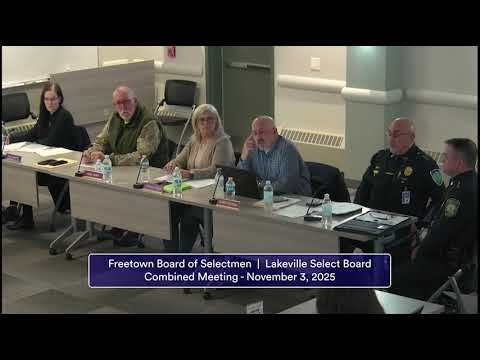
Town officials described a wide range of potential costs and complications for instituting MBTA quiet zones at the meeting on Nov. 3 and said any credible mitigation will require coordinated action among Freetown, Lakeville and neighboring municipalities.
Andrew, the town administrator, summarized preliminary feedback from a state-funded diagnostic that the towns have not yet received in full. He said the towns face 11 railroad crossings, with some sites — notably North Precinct and Lynyrd — potentially costing in the million‑dollar range and others (for example, Malbone/Beachwood crossover) likely at the lower end of the $30,000 range.
Officials cautioned residents that funding alone may not guarantee silence: federal/state certification and conductor discretion can still result in horns being used for safety reasons even after infrastructure is installed. The diagnostic report will also outline ongoing maintenance and recertification requirements, which officials said include a three‑year recertification cycle and recurring traffic studies.
Officials scheduled a Dec. 17 informational meeting at the Freetown Police Station to gather resident input and to invite agency representatives; towns said they would pursue mitigation alternatives if quiet zones proved infeasible, including targeted sound‑mitigation measures for eligible properties. No funding decisions were made at the Nov. 3 meeting.