
Wyoming committee backs $3 million forest‑health grant program, adds limited federal‑land access
Get AI-powered insights, summaries, and transcripts
Subscribe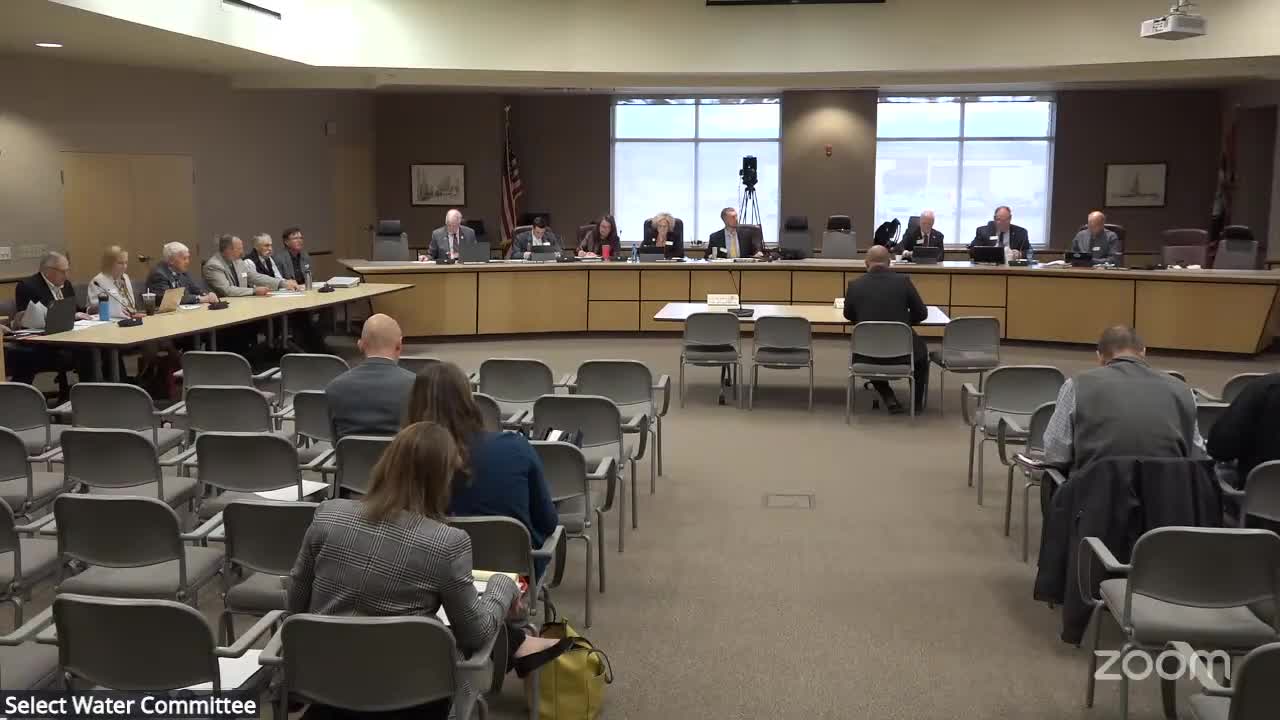
Summary
A legislative committee on Thursday voted to sponsor a bill creating a state forest health grant program that would provide up to 75% cost‑share for eligible projects and receive a $3 million general‑fund appropriation.
A legislative committee on Thursday voted to sponsor a bill creating a state forest health grant program that would supply competitive cost‑share awards to help fund active forest management projects.
The draft bill, 26LSO180, creates a forest health grant account administered by the Wyoming State Forester and authorizes grants to pay no more than 75% of eligible project costs. The bill would appropriate $3 million from the general fund to the new account and requires the state forester to report annually to the joint Agriculture, State & Public Lands and Water Resources interim committee on grants awarded. The account is set to sunset for new awards on July 1, 2030, under the draft language.
State Forester Kelly Norris told the committee Wyoming’s forests are ‘‘headwaters’’ for multiple river systems that supply downstream municipalities and noted active forest management helped slow the Elk Fire last year. Norris and other witnesses said a state cost‑share program could help leverage federal fuels mitigation grants while allowing Wyoming to prioritize projects on state, private and local lands.
Supporters from industry and local governments said well‑designed forest health projects can reduce wildfire severity, protect municipal water supplies and reduce long‑term suppression costs. Ben Woodke of the Intermountain Forest Association and Brad Brooks, director for the City of Cheyenne Board of Public Utilities, described examples where prior treatments limited fire intensity near reservoirs and saved treatment and restoration costs.
Committee members raised staffing and funding sequencing questions. Norris said the program could operate at the $3 million scale without additional permanent staff but that larger, multi‑year rollouts would likely require added capacity or contractor support. Jason Mead, director of the Wyoming Water Development Office, supported the concept but cautioned that the standing Water Development program is under demand pressure from aging irrigation and municipal infrastructure projects.
Amendment adopted: Committee members approved an amendment allowing projects on federal land to participate but reducing the maximum state grant share for federal‑land projects to 50% (instead of 75% for state/local/private land). The amendment also allows receipts from Good Neighbor Authority contracts to be used as part of nonfederal matching funds. Sponsors said those changes are intended to enable cross‑boundary projects while limiting the portion of state funds used on federal lands.
Vote: The committee voted to sponsor the bill as amended in a roll call (8 yes, 2 no). The committee will carry the bill forward for the upcoming session.
What remains: Members and witnesses said the committee and agencies will continue to refine program rules, reporting, and staffing needs in the interim. The forester recommended working with local entities to prioritize high‑risk watersheds and stressed that large, cross‑ownership projects reduce per‑acre costs and administrative overhead.