
Providence council members raise alarm over SNAP pause, urge local aid and community response
Get AI-powered insights, summaries, and transcripts
Subscribe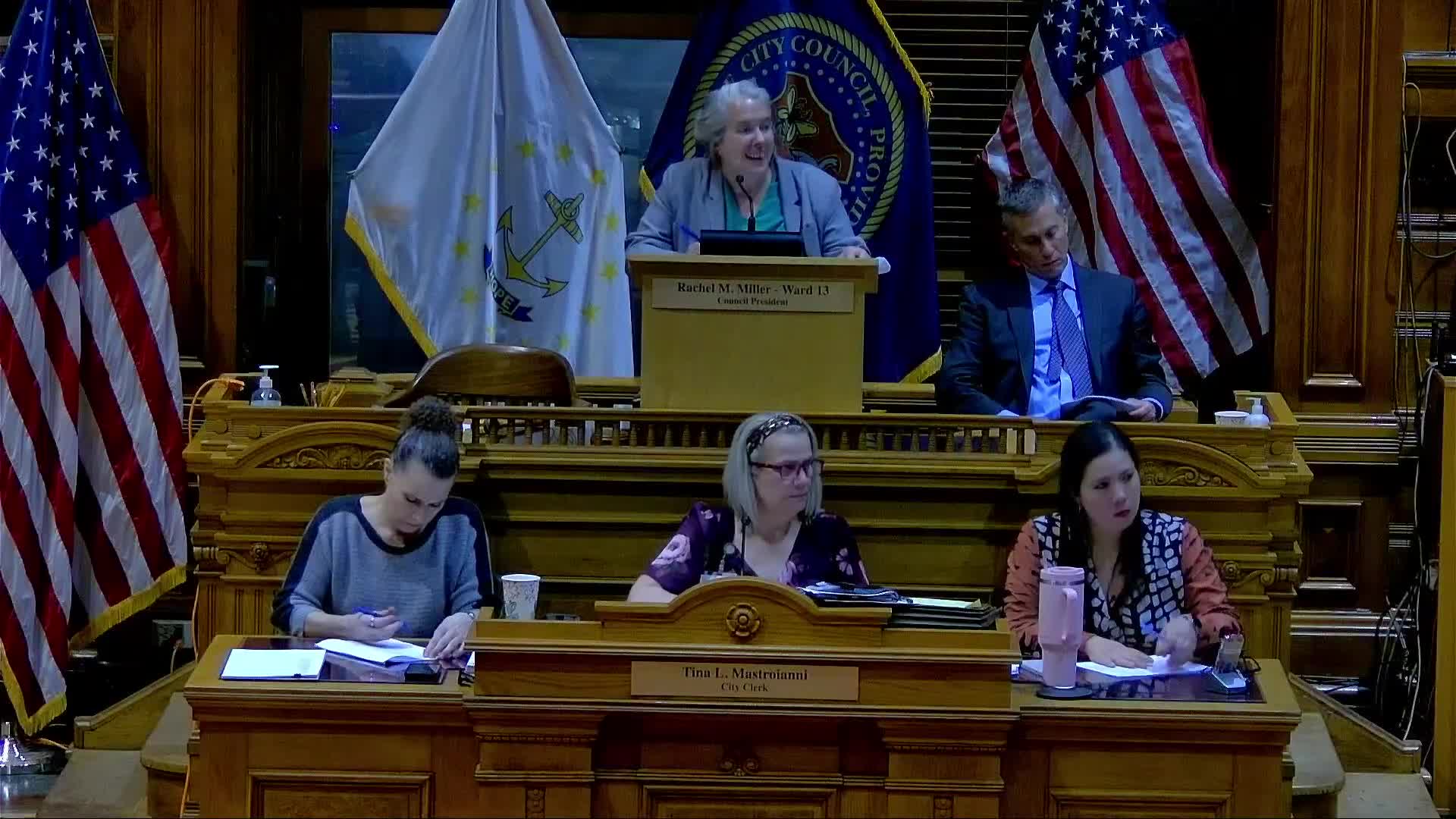
Summary
Councilors used personal expressions at the Nov. 6 meeting to call attention to a federal pause in SNAP benefits, report increased local food insecurity and ask the city and partners to step up; the city has committed $25,000 to the Rhode Island Food Bank and councilors described local food-pantries and grassroots efforts.
Several Providence City Council members used the council's personal-expression period on Nov. 6 to warn that a federal pause in SNAP benefits is producing immediate hardship and to describe local response efforts.
"This pause and this, disastrous decision by our federal government is having real life, implications, to a lot of the families in our neighborhood," Councilor Sanchez said, adding gratitude for the city administration and partners who stepped up with emergency assistance and litigation. Sanchez said the city had committed $25,000 to the Rhode Island Food Bank and asked colleagues to consider additional local resources.
Other councilors recounted local examples of need and community response. One described a young child taking food from a library pantry to feed a parent; another highlighted a neighborhood member, Sandra Castro, who set up a porch food pantry with a sign reading "Come and take what you need." A local nonprofit, the Global Fund to End Childhood Hunger and Poverty (founded by Marcia Rangeland Vassal), was cited as collecting donations for school food pantries across multiple neighborhood schools.
Councilors called for continued coordination among the city, charitable organizations and schools to meet increased demand and urged continued legal and legislative pressure on federal authorities. Several council members emphasized that this is a multi-ward problem and urged attention from the whole council.
The council did not vote on specific emergency appropriations during the meeting, but councilors said they were exploring local funding options and continuing to coordinate with food banks, libraries and community groups to expand pantries and delivery supports.