Get Full Government Meeting Transcripts, Videos, & Alerts Forever!
Get email alerts on the Homeless Services topic
No spam. Unsubscribe anytime.
PATH presents two‑year operations report; city readies interim operator as shelter provider exits
Summary
People Assisting the Homeless (PATH) told the Santa Barbara City Planning Commission on Nov. 6 that it has continued to operate a 100‑bed, year‑round interim shelter at 816 Casique Street and has provided services to roughly 650 individuals since the last planning commission report.
People Assisting the Homeless (PATH) told the Santa Barbara City Planning Commission on Nov. 6 that it has continued to operate a 100‑bed, year‑round interim shelter at 816 Casique Street and has provided services to roughly 650 individuals since the last planning commission report.
The report, required every two years by the site’s 1999 conditional use permit, said PATH recorded 66 placements into permanent housing and 554 program exits over the reporting period and continued partnerships with the City of Santa Barbara, Goleta, Santa Barbara County agencies, Cottage Health and Be Well.
“We have the opportunity to have a lot of overlap with the new provider,” Tessa Uribe, PATH chief program officer, said of the transition, adding that PATH hopes that key staff “could potentially have the opportunity to also work for the new provider.”
Why it matters: PATH notified the commission that it will end countywide operations at the end of this year and that city leadership is working to transition the shelter’s operation to an interim nonprofit provider by December 2025; PATH’s last stated day of operations is Dec. 31. Staff and PATH emphasized continuity of services, preservation of case management capacity and coordination with housing voucher and rapid‑rehousing partners during the handover.
On services and neighborhood coordination, PATH said it runs outreach and neighborhood walks, provides Spanish‑language outreach, coordinates with the Santa Barbara Police Department and has implemented a 24/7 restroom program to reduce public restroom complaints in the neighborhood. PATH also described a local “trash for cash” cleanup initiative and distribution of a neighborhood resource guide.
PATH reported constraints and near‑term program changes: off‑site parking for staff and program participants (20 spaces at 110 S. Quarantina) will be temporarily displaced by renovations on that lot and alternative parking will need to be identified; PATH also noted that some HUD‑funded and college partnership programs will phase out on contract end dates and that city staff are working to re‑deploy those funds locally when contracts expire.
Commissioners pressed PATH and city staff about what success will look like for a new provider and how services will remain continuous during transition. “There’s been a lot of coming together and really propelling that effort,” Uribe said, noting county and voucher partnerships have helped recent placements. Commissioner Peterson asked specifically about the transition timeline and required supports for case management; PATH and city staff said overlap is planned and that staff retention by a successor provider is a best practice the city is encouraging.
Santa Barbara Police Department Commander Chris Payne told the commission that complaints related to the shelter have been cyclical and that problem‑solving has improved as relationships and communications between PATH, police and city code enforcement have stabilized.
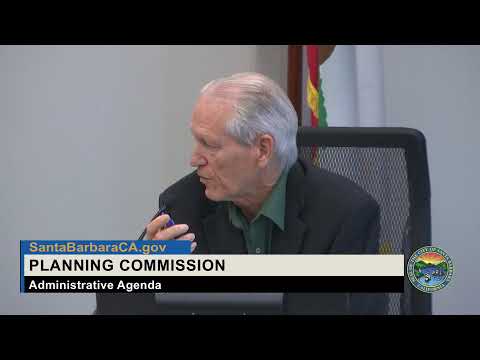
No formal commission action was required or taken on this item. The planning commission received the report and asked staff to continue coordinating the transition of operations and the neighborhood notifications required by the conditional use permit.