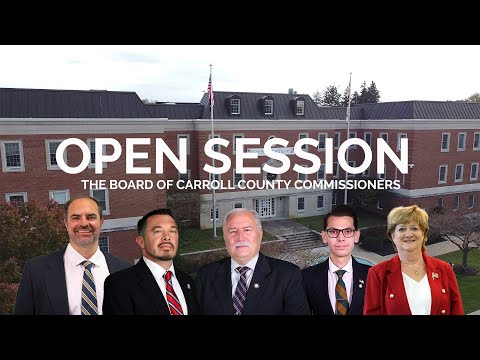
Carroll County commissioners direct staff to draft temporary deferrals for Freedom District zoning
Loading...
Summary
Carroll County commissioners on Nov. 4 directed staff to draft temporary deferral ordinances for four categories of development in the Freedom Community growth area — retirement/age‑restricted housing, cluster subdivisions, planned commercial centers with residential components, and self‑storage — after an extended public hearing and board discussion.
Carroll County commissioners on Monday directed staff to prepare temporary deferral ordinances that would pause processing of new approvals in the Freedom Community area for four categories of development: retirement or age‑restricted housing, cluster subdivisions, planned commercial centers with residential components, and self‑storage facilities.
The board took the action after a multihour briefing, public comment and commissioner debate on a proposal introduced by Commissioner Susan Krebs to create short moratoria while staff and the Planning and Zoning Commission review the county code language that implements the Freedom master plan. Krebs said the intent is to fix gaps and unintended consequences that emerged when the county’s comprehensive rezoning and code changes were adopted during the COVID period and later interpreted in ways she said are inconsistent with the master plan’s intent.
Krebs said examples include: age‑restricted developments being built without universal‑design features (zero‑step entries, single‑level living) despite receiving greater density; cluster subdivisions that count stormwater ponds as the required community open space; mixed‑use or planned commercial centers whose designs encourage on‑street parking in hazardous locations; and new, large self‑storage buildings sited next to long‑established homes. "We're not trying to stop growth," Krebs said. "We're trying to be clear about what we expect so communities, developers and first responders have certainty."
Supporters who addressed the commission during the public comment period said a short, targeted pause is reasonable so the county can align the ordinances with the master plan and address traffic, public‑safety and school‑capacity concerns. Opponents — including builders, land‑use industry groups and at least one landowner with projects well along in the approval process — warned a moratorium would harm property owners, slow jobs and housing production, and could invite litigation; they cited a 2003 legal judgment against a prior county moratorium as a cautionary example.
After deliberation the board voted to ask staff to prepare draft ordinances and return them to the commission and Planning and Zoning for public hearings and final votes. The board’s direction set different draft durations in the requested ordinance language: retirement villages and retirement homes, six months; cluster subdivisions, six months; planned commercial centers, eight months; and self‑storage, three months. Commissioners did not adopt the draft ordinances during the Nov. 4 meeting — they only directed staff to draft the text for later public hearings and final decisions.
The actions taken Monday are procedural (directing staff to prepare ordinance drafts) and do not themselves change approvals already issued. The county attorney and planning staff will prepare ordinances and legal analyses, schedule public hearings and return the measures for final action at a later date. The commission’s direction means that, if and when an ordinance is introduced and finally adopted, it would temporarily pause processing of the listed application types in the Freedom area only for the duration specified in the ordinance.
What passed and what comes next The board voted 3–2 in favor of directing staff to draft the ordinances (each item passed by the same 3–2 margin). Commissioners who supported the step said it is a needed, targeted pause to fix code language and increase predictability; commissioners who opposed it warned of economic and legal risk and urged a faster non‑regulatory alternative such as accelerated code revision work sessions.
Staff will draft the ordinances, circulate them for legal review, schedule them for Planning and Zoning consideration and hold public hearings before the board makes any final decision. Commissioners who voted in favor said they will attempt to accelerate the drafting and review process but noted timing will depend on Planning and Zoning’s calendar and legal review.
Why it matters The Freedom Community Planning Area is Carroll County’s largest designated growth area and contains a mix of residential neighborhoods, small businesses and highway‑facing commercial parcels. Changes to how the county defines age‑restricted housing, cluster open space, mixed use with residential components and the scope of allowable self‑storage could alter which projects qualify for higher density, how much usable open space is required, and how developments must be designed to protect public safety and infrastructure. Given the number of projects already in the pipeline and the relatively limited amount of vacant land in the area, any code changes could have practical and financial effects for property owners, nearby residents and service providers.
Ending note Commissioner Krebs said the intent is not to block development but to make county code clear and consistent with the comprehensive plan so both residents and developers have a predictable process. The board’s procedural vote on Nov. 4 sets a public drafting and hearing process in motion; the measures themselves will return for public hearing and final votes before any temporary pause goes into effect.