Get Full Government Meeting Transcripts, Videos, & Alerts Forever!
Get email alerts on the Public Health topic
No spam. Unsubscribe anytime.
County and community partners mark 10 years of Black Child Legacy Campaign; mixed trends in preventable child‑death metrics prompt call to sustain funding
Summary
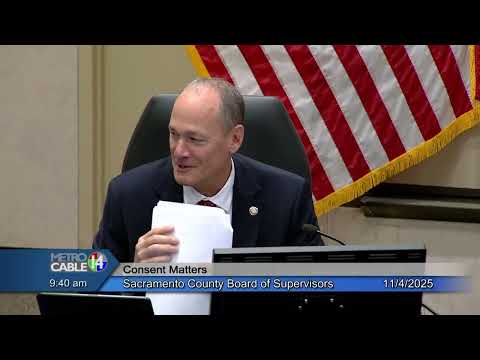
County and community partners reported results from a decade of the Black Child Legacy Campaign to the Board of Supervisors on Nov. 4, 2025, highlighting reductions in some preventable child‑death categories and asking the board to sustain funding as pandemic‑era data produced mixed trends in others.
County and community partners told the Sacramento County Board of Supervisors on Tuesday that a decade of coordinated, locally led prevention work under the Black Child Legacy Campaign (BCLC) has produced measurable reductions in several categories of preventable child deaths — but that COVID‑era data and other trends underscore the need to sustain funding and expand services.
The cross‑sector program, developed after a 2011 review documented that African American children were dying at disproportionately higher rates than other populations, coordinates community incubator lead sites (CILs), culturally focused outreach, safe‑sleep education and other prevention strategies in seven neighborhoods. County departments, philanthropic partners and nonprofit providers presented programmatic updates and community testimony for the board.
“BCLC is a collective impact effort: shared goals, shared measures, continuous communication and a backbone organization to keep the work coordinated,” said Shelby Boston, director of the Department of Child, Family & Adult Services (DCFAS). Boston provided the Board with first‑quarter operational and training updates for county‑run Welcome Homes and summarized DCFAS investments in culture broker staff and BCLC programs.
Kim Pearson (DCFAS) said culture brokers — community‑based navigators deployed in CILs — closed more than 90% of assigned family cases successfully during the reporting period and that 43% of brokered families had child‑welfare investigations closed with no further intervention. “That’s an important signal that culturally‑rooted, community‑based engagement prevents deeper system involvement,” Pearson said.
Probation Chief Jamal Rowe and deputy staff described the department’s efforts to reduce juvenile justice involvement in BCLC neighborhoods, including a probation outreach vehicle for community check‑ins, a youth advocate assigned to BCLC neighborhoods and efforts to keep youth engaged in services rather than court sanctions. “We’ve served more than 800 youth at the seven CILs and made over 1,000 referrals to community‑based intervention services,” probation staff said.
Public Health Officer Dr. Olivia Kasirye said the campaign’s interventions also operate upstream of acute care: a County community nursing unit and outreach at birthing hospitals have supported safe‑sleep education and perinatal services, she said.
First 5 Director Julie Galello and Sierra Health Foundation staff (which serves as BCLC’s backbone) summarized investments and outcomes. First 5 reported more than 1,100 parents received safe‑sleep education in recent years and 602 cribs distributed in the last reporting year under the Safe Sleep Baby program; First 5 said it has integrated safe‑sleep training into all eight birthing hospitals in the county.
Sierra Health Foundation managing director Shelley Jones and evaluation staff said BCLC and partner organizations reported mixed trends in three‑year rolling data that includes pandemic years. The foundation’s most recent three‑year window (2020–2022) shows large reductions in some categories (notably child abuse and neglect homicides) but increases in other areas: perinatal condition deaths and third‑party homicides rose during the COVID‑influenced period. Foundation staff and county presenters noted small absolute numbers mean year‑to‑year swings should be interpreted cautiously, but they urged sustained investment to continue downward movement.
“Since 2013, the county has invested in cross‑sector strategies to raise awareness, provide trauma‑informed services, and empower community solutions,” Jones said. “Over $95 million has been invested since fiscal 2013–14 across DCFAS and partners, and the work has saved lives — but we must not let funding lapse.”
Community leaders and CIL staff provided on‑the‑record testimony about program impacts: examples included a pregnant client who avoided poor birth outcomes after doula and prenatal support, families receiving cribs and safe‑sleep education, youth who received tutoring and leadership development, and youth sports and mentoring programs that provide positive alternatives to street activity.
“Youth and parents in the room described how these CILs are often the first place they will go when they need diapers, a crib, a counselor, or help with housing,” said Shelley Jones. “The work is local, but its lessons are being studied elsewhere in the country.”
Following the presentations, supervisors praised the decade of work and asked staff to continue evaluating outcomes, to refine community‑level metrics and to return with implementation steps for newly updated strategic goals that expand target areas such as economic supports and systems coordination.
Speakers (first reference): - Shelby Boston, director, Department of Child, Family & Adult Services (00:31:21). - Jamal Rowe, chief (probation) (00:32:36). - Kim Pearson, DCFAS division manager (00:34:12). - Julie Galello, director, First 5 Sacramento (00:37:52). - Shelley Jones, managing director, Local Initiatives Department, Sierra Health Foundation (00:36:41). - Jadita Gomes, Sierra Health Foundation (evaluation lead) (00:37:58).
Actions (at meeting): - Receive and file: Black Child Legacy Campaign fiscal year 2023–24 annual report and 10‑year review (motion/second; vote: unanimous to receive and file).