
Residents press Convene on late hours, crowd control and event limits for 555–557 Broadway
Get AI-powered insights, summaries, and transcripts
Sign Up Free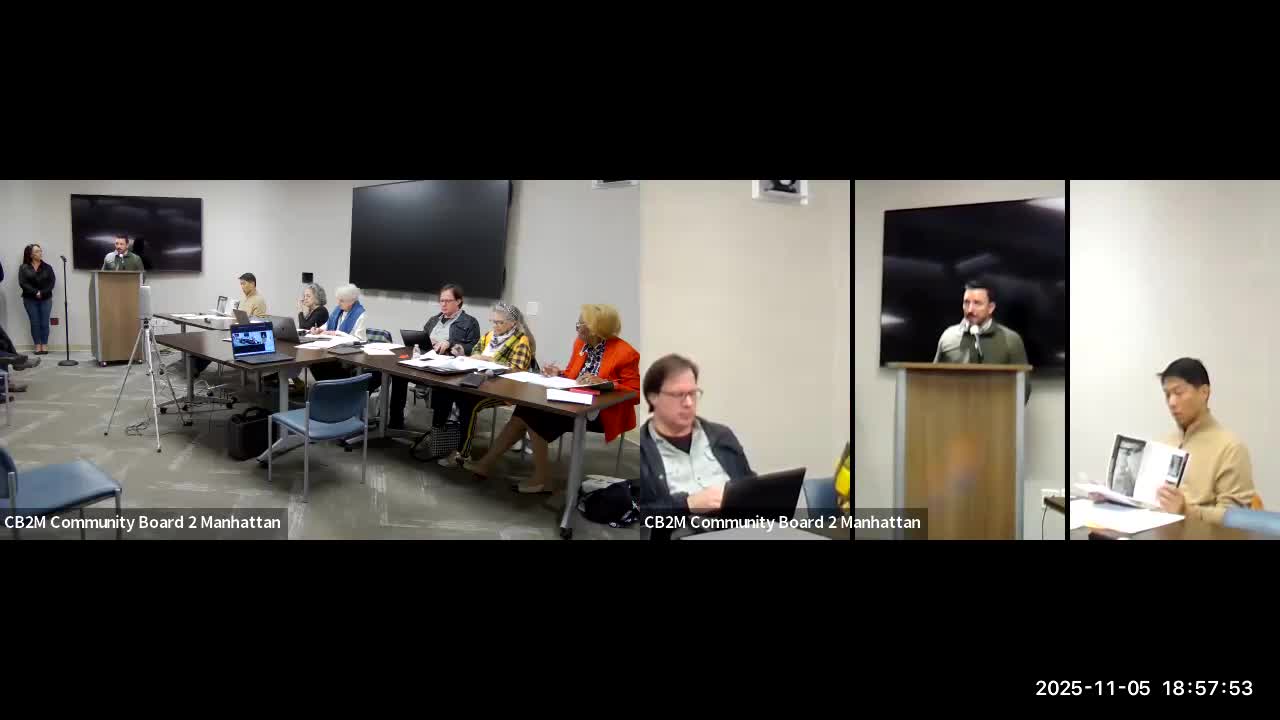
Summary
Convene, the event‑space operator proposing to combine 555 and 557 Broadway into a corporate meetings facility, told Community Board 2 that most programs would be daytime corporate meetings and training, but residents pressed the operator over late‑night receptions, noise and large, concentrated exits from the building.
Convene, the hospitality operator proposing a corporate meetings and events venue at 555–557 Broadway, told Manhattan City Community Board 2’s SLA committee that the space would serve Fortune 500 clients for daytime training and occasional evening receptions, and said it would not host weddings or fashion shows.
The company’s vice president of operational excellence, Alan Beardsley, said the planned facility has seven rooms and a maximum capacity of about 452 people. Beardsley said hours requested on the SLA application are broad to allow flexibility for corporate programs but that most arrangements are daytime: “these are specifically daytime trainings. ... And then as a maybe perhaps a recognition of progress within their own roles or like a celebration during the holiday time, that’s when the receptions really come into play,” he said.
Neighborhood residents and the Broadway Residents Coalition said evening events at the scale Convene describes would disrupt already-heavy weekend foot traffic in SoHo, reverberate in cast‑iron buildings and reduce the few quiet hours residents have each night. Resident William Honey said the block already balances commercial and residential uses and asked for stricter limits on late‑night activity. Resident Renee Munroes said venues with poor controls have historically created repeated quality‑of‑life complaints.
Convene outlined a set of proposed stipulations intended to address those concerns. They included: lowering illumination after hours (shades down at 11 p.m.), scheduling grease‑trap cleaning and deliveries during weekday business hours, confirming rooftop ventilation will not create excessive noise or discharge, assigning a dedicated on‑site hospitality coordinator to manage arrivals and departures, requiring on‑site security for events of 100 or more attendees, posting a “respect neighbors/exit quietly” sign and providing advance notification of very large events to nearby residents. The company also proposed limiting weekend events to three per month and allowing eight annual exceptions that could run later on any night of the year; the applicant said it could accommodate a request to have those exceptions stop alcohol service 30 minutes before a stated hard close and to require attendees to exit within 30 minutes after the stated closing time.
Convene’s construction lead, Ken Nemeth, walked the committee through the Department of Buildings permitting path. He said the project involves “alt 1” and “alt 2” permits on separate tax lots and that the team had obtained plans‑examiner approvals for some changes while other approvals (notably written fire‑alarm approvals) were pending.
Neighborhood advocates pressed for a clearer, enforceable set of stipulations and for a named, consistent point of contact who would attend to street‑level issues during events. Several residents said the difference between a staffed, familiar hospitality coordinator and a short‑term hired guard would determine whether incidents were resolved in‑place or escalated.
The committee did not record a vote. In the business session the committee summarized the negotiated items and said it would review proposed stipulations and the applicant’s revised hours in follow‑up meetings with the neighborhood.