Get Full Government Meeting Transcripts, Videos, & Alerts Forever!
Get email alerts on the Seniors Services topic
No spam. Unsubscribe anytime.
FeedMore warns reduced town donation could limit Meals on Wheels capacity; council asks for agreement
Summary
FeedMore Western New York told the Cheektowaga board that municipal funding helps close the gap between federal/state reimbursement and the full cost of home-delivered meals; a board member asked staff to seek a formal agreement about the town's contribution.
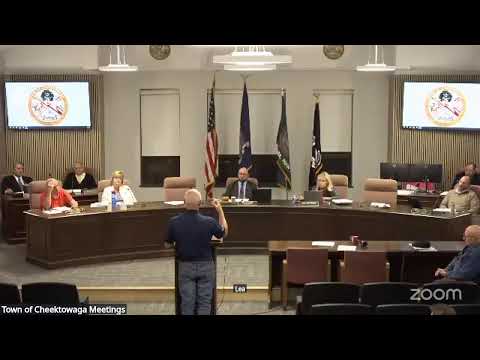
Colin Bishop, a representative of FeedMore Western New York, told the Cheektowaga Town Board the agency serves 385 town residents and is on pace to deliver about 96,000 meals in the region this year; he said municipal contributions make up part of the funding mix because federal, state and county reimbursements do not cover 100% of program costs.
"When we do lose funds, it might mean that there are future changes because we cannot continue doing the work we do when we continue to lose funds," Bishop said, adding that current clients would not abruptly lose service but that adding new clients could be delayed and the meals themselves might be adjusted to be more cost-conscious.
Councilmember Benczkowski said the board is not eliminating Meals on Wheels service and characterized some public warnings as "scare tactics." The council member asked the town attorney for an opinion about whether the town's donation practice without a written agreement raises concerns under the New York State constitutional gift clause. Benczkowski said she had asked FeedMore to supply details on other municipal contributions and that the town seeks accountability for taxpayer funds.
FeedMore's representative described the municipal contribution as an earmarked voucher in other communities and warned that reduced local support for Cheektowaga could reduce the agency's ability to add new home-delivered meals clients or adjust meal composition to reduce costs. The board did not change the Meals on Wheels service during the hearing; discussion focused on whether the town should require a formal agreement outlining local contributions and use.