Get Full Government Meeting Transcripts, Videos, & Alerts Forever!
Get email alerts on the Council Veto Override topic
No spam. Unsubscribe anytime.
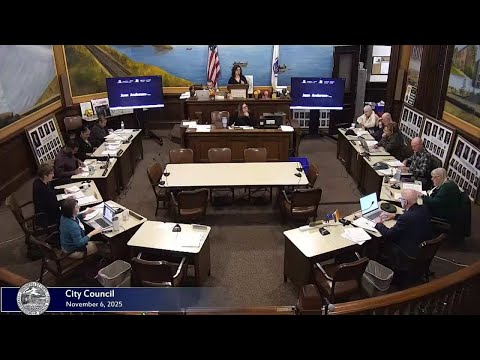
Holyoke City Council overrides mayoral veto, requests written legal opinion
Summary
After debate over the mayor’s authority to veto a council request for a written legal opinion, the Holyoke City Council voted 11–2 to override Mayor Garcia’s veto and asked the law department to provide the requested opinion as soon as possible.
The Holyoke City Council on Thursday voted to override Mayor Garcia’s veto of an order that had directed the law department to prepare a written legal opinion about a prior transfer and related action.
Councilor Lehi Jourdain moved to override the mayor’s veto after an extended discussion over whether the council’s request for a legal opinion was an internal council matter or an executive function subject to mayoral veto. City Solicitor Anthony (A.) Bissonnette told the council the veto implicated executive authority because the underlying order requested action of an executive department and thus could be subject to the mayor’s veto.
Jourdain said the council has a long-standing practice and ordinance authority to request legal opinions. “The ordinances of the City of Holyoke are crystal clear,” Jourdain said, arguing the mayor lacks authority to block the council from obtaining a written legal opinion. Attorney Bissonnette replied that his reading differed: because the request involved an executive department, it was not the council’s “internal affairs” and therefore the mayor could lawfully veto it.
The council voted by roll call to override the veto, with the tally recorded as 11 yeas and 2 nays. The clerk recorded individual votes during the roll call; the council then directed the law department to provide the written opinion “ASAP.”
Why it matters: The vote resolves an immediate dispute over the council’s access to a written legal opinion about the transaction in question and establishes that the council will seek formal written guidance rather than rely solely on in-meeting exchanges. The override did not itself unwind any already-executed transfer; the city solicitor said the fiscal transfer and related contract had already been completed and the auditor had signed off.
What happened next: Councilors made clear they want the law department’s written opinion on the scope of the mayor’s veto power and the council’s right to request legal opinions. The council’s order requesting the opinion will be treated as a priority for the law department.