
Springfield chiefs urge drivers to prepare for wet roads, deer season and possible snow
Get AI-powered insights, summaries, and transcripts
Subscribe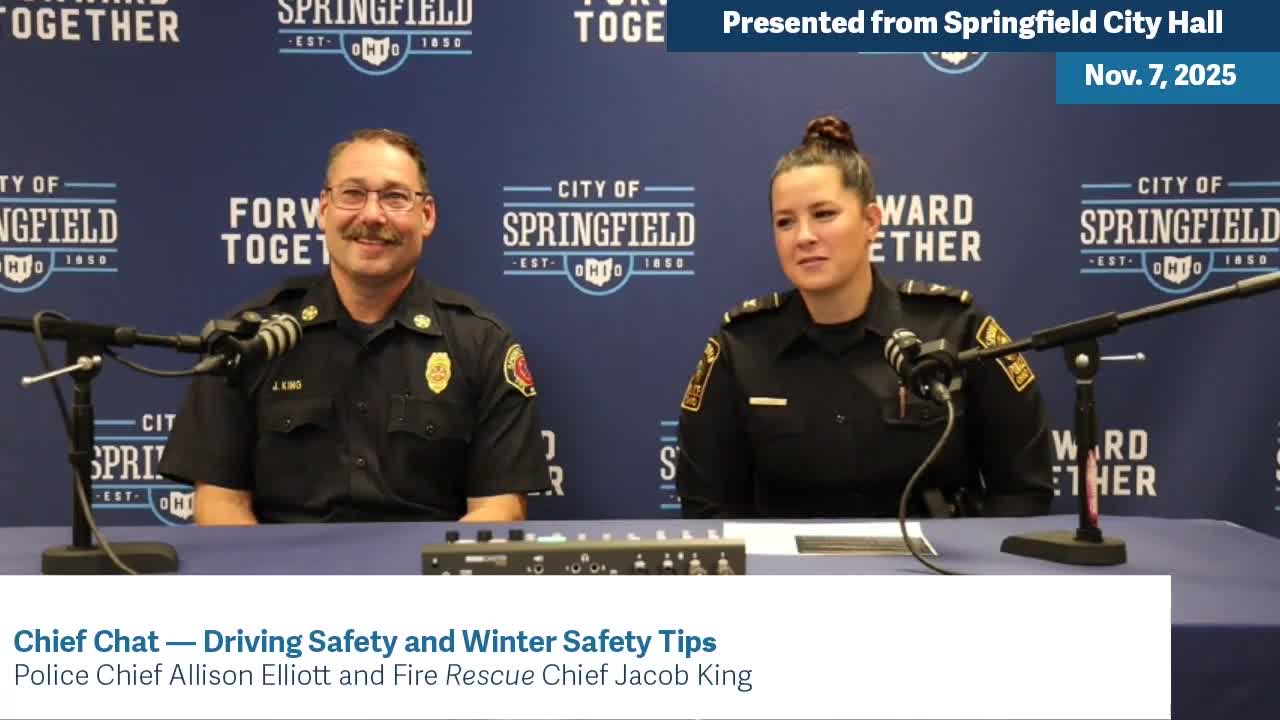
Summary
Fire Chief Jacob King and Police Chief Allison Elliott advised motorists to increase vigilance after heavy rain, as falling leaves, time-change darkness and an expected snow event raise collision risk. They recommended clearing windshields and lights, maintaining tire pressure and following distances, and keeping basic emergency supplies in cars.
Fire Chief Jacob King and Police Chief Allison Elliott used the city’s "Chief Chat" broadcast to urge motorists to take extra precautions as wet conditions, falling leaves, the time change and an expected snow event increase crash risk.
"It's a great opportunity for us to just have a a quick reminder, I think, talking about inclement weather coming and then obviously with fall leaves on the ground," King said, adding that the time change can push many commuters into low-light hours when animal activity is higher. "So make sure you're paying attention and utilizing your headlights."
The chiefs highlighted several practical steps drivers can take. They advised fully clearing windshields and side and rear windows rather than driving with a small cleared hole, and clearing headlights and taillights after snowfall so vehicles remain visible. King said drivers should warm their car and clear all glass before driving; Elliott added that low sun at dawn and dusk can create a "washout" making it harder to see pedestrians and animals.
On following distance and lane choice, King advised giving extra stopping distance on wet or icy roads—"typically, we we, talk about 3 car lengths"—and suggested moving to the slow lane if using hazard lights on a multi-lane road so traffic can pass safely. Both chiefs cautioned that driving too slowly can also create hazards.
They recommended routine vehicle checks as temperatures fall: monitor tire pressure and tread, replace worn wiper blades, and consider letting a vehicle warm up while remaining mindful of security (see separate guidance on vehicle theft).
As a final preparedness step, the chiefs suggested keeping an emergency kit in vehicles including an ice scraper, jumper cables, a phone charger, warm blanket, hat and gloves, and water, and advised keeping the gas tank at a reasonable level to avoid running the tank empty during long delays.
The chiefs asked residents to watch official city and county channels for updates on road conditions and to take extra time when traveling in poor weather to reduce crash risk.