Get Full Government Meeting Transcripts, Videos, & Alerts Forever!
Get email alerts on the Dunbar History Walk topic
No spam. Unsubscribe anytime.
San Marcos council hears plan for Dunbar Neighborhood History Walk; staff seeks consensus to proceed
Summary
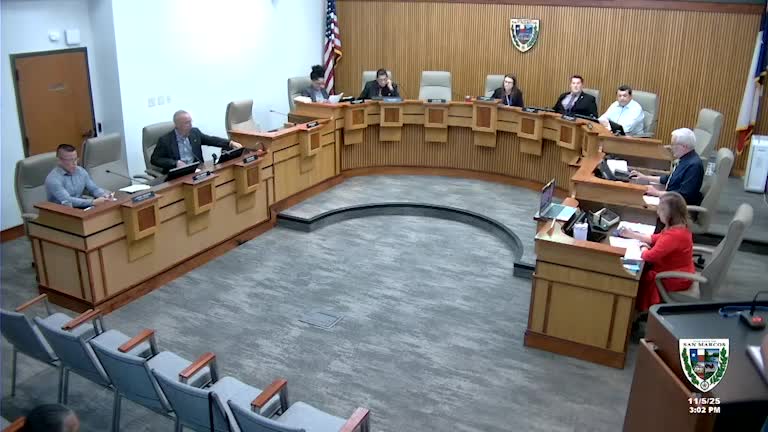
San Marcos City Council members on Nov. 5 heard a staff presentation on the proposed Dunbar Neighborhood History Walk and signaled informal support for staff to continue developing the project.
San Marcos City Council members on Nov. 5 heard a staff presentation on the proposed Dunbar Neighborhood History Walk and signaled informal support for staff to continue developing the project.
The Dunbar History Walk presentation was delivered at the Nov. 5 work session by Charlotte Watney, creative and marketing manager for Destination Services, and other city staff. “The Dunbar History Walk, is a visible way to recognize the intangible heritage and tell the story of the Dunbar neighborhood,” Watney said. Staff recommended concentrating physical markers along the sidewalk loop at Dunbar Park so the project can include non-physical places and serve as a destination for visitors.
Why it matters: the project is intended to document people, businesses, churches and organizations that long-time residents say shaped the neighborhood’s cultural life. Organizers and staff said a running list of nominations will let the city install markers incrementally over multiple years while building a digital record at smtxarts.com.
What staff proposed: markers on raised rectangular platforms with an art element (tile or mosaic) designed in collaboration with neighborhood artists; two community committees (a project development committee and a submission review committee) that will include representatives of the Dunbar Heritage Association, Kalaboose African American Museum and the Dunbar Sisters Foundation; archival research and reliance on current and former residents for verification; and both paper and online submission forms and community open houses for outreach.
Staff said the inaugural installation is slated for fall 2026 and that the Arts Commission will consider a modest budget to support the launch. Stephanie Reyes, city staff, told council the timeline will be adjusted based on council direction. “We want to make sure the Dunbar neighborhood sees this as their project and that the city staff is just here to help facilitate it,” Watney said.
Community members who have helped develop the project spoke during citizen comment. Mittie Miller, representing the Dunbar Sisters Foundation, introduced the idea to council as “a feature project” and said the initiative aims to “preserve the history of the Dunbar neighborhood.” Deborah Giles Webster, a Dunbar neighborhood resident and supporter, urged the project to present “at least 10 or 15 people and let the community vote on it,” saying nominations should reflect the neighborhood’s past even when former residents no longer live in San Marcos.
Council questions focused on outreach, how staff would reach former residents and the expected number of markers in the inaugural year. Staff said outreach will use social media, email lists, phone calls and door-to-door flyers; they estimated doing about 10 markers in the inaugural installation and keeping a running list for later years.
No formal vote was taken. Staff asked for council consensus to continue development, present to the historic commission and seek Arts Commission budget approval; councilmembers requested staff continue community outreach and return with needed budget and guideline details.
Next steps: staff will present the project to the Historic Commission, seek Arts Commission budget approval, finalize submission guidelines with the project committee and prepare the inaugural installation materials for fall 2026. Additional nominations and research will be added to the project microsite as they become available.