
Oceanside UFSD reports strong special‑education rating, outlines continuum from preschool to work skills
Get AI-powered insights, summaries, and transcripts
Subscribe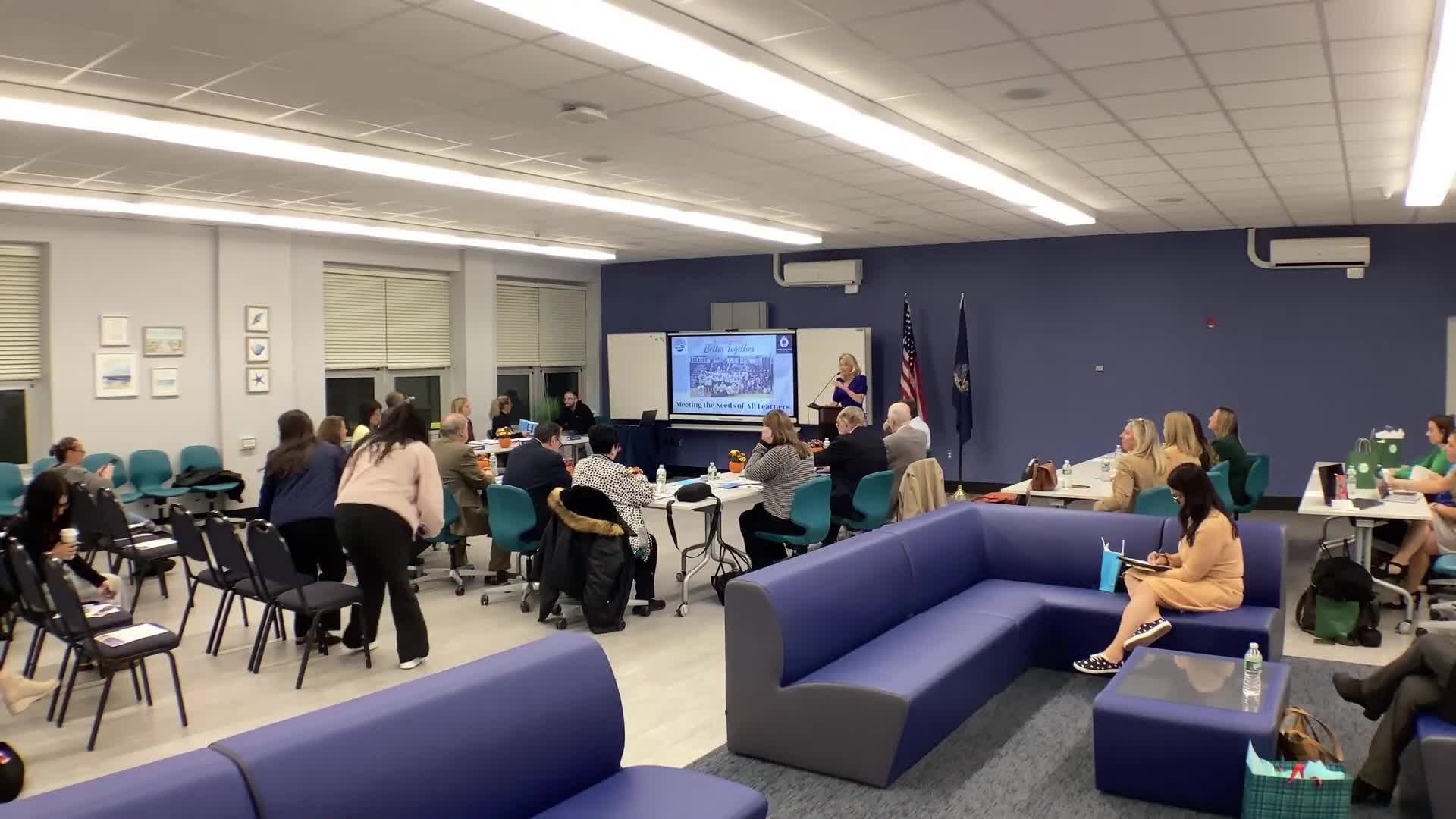
Summary
Oceanside Union Free School District officials presented an overview of the district's special‑education continuum to the Board of Education, saying Oceanside "meets requirements" under the New York State Education Department's Results Driven Accountability matrix and outlining programs that span preschool through high school and into community‑based work experiences.
Oceanside Union Free School District officials presented an overview of the district's special‑education continuum to the Board of Education, saying Oceanside "meets requirements" under the New York State Education Department's Results Driven Accountability matrix and outlining programs that span preschool through high school and into community‑based work experiences.
District leaders told board members the district serves 911 students with individualized education programs (ages 4–21) and employs more than 300 staff who support special education services, including teachers, related‑service providers, psychologists, BCBAs, nurses and clerical staff. Robin Price, director of early childhood special education, said referrals "can be made by parents, caregivers, educators, medical providers, or other professionals who have concerns about a child's development," and described the committee on preschool special education process under section 4410 of New York State Education Law.
Price provided preschool counts as of November 2024: 80 students receive preschool itinerant services; 55 receive related services only; 25 receive both related services and itinerant teacher support; and 44 attend approved preschool special education programs (three integrated classrooms and 41 special‑class placements). She said the district monitors readiness and transitions with frequent program visits and collaboration among parents, preschool staff and CPSC providers to prioritize the least restrictive environment.
Kate Mugna, director of elementary special education, described the district's elementary continuum—consultant teacher services, resource rooms, related services and a range of program placements—adding that programs are intentionally placed in specific buildings to consolidate staff expertise and specialized spaces. Erin Marrone, principal of School 2, said School 2's 15:1:1 program expanded to four classrooms this year and pairs each 15:1:1 class with a general‑education team class to promote inclusion and early relationship building.
Jackie Graham, principal of School 4, described the district's 8:1:2 special‑class program and the Sailors Skill Cove, a functional living space where "students practice daily routines like cooking, cleaning, and self care while also strengthening academics through reading recipes, budgeting, and following multi step directions." Graham said the space supports hands‑on instruction that connects classroom learning to real life.
Dr. Frank Sangari, principal of School 8, outlined the district's Integrated Co‑Teaching (ICT) model and said Oceanside moved to full‑day co‑teaching partnerships in K–3 and centralized ICT classrooms to strengthen collaboration, planning and consistency across schools.
District leaders also highlighted literacy and intervention work. Elementary staff reported rolling out SPIRE, an Orton‑Gillingham‑based multisensory reading program, training more than 40 educators and providing SPIRE instruction to over 150 students across the six elementary schools.
At the secondary level, Saadia Mohammed, high school director of special education, said Oceanside supports 365 students with IEPs through a continuum that includes resource rooms, consultant teacher supports, integrated co‑teaching, 15:1 special classes and the ACE 12:1:2 program for students with more intensive needs. Mohammed credited the board's creation last year of a work‑based learning coordinator position and described student opportunities to job‑shadow and gain workplace skills with partners such as Mixology, Starbucks, 5 Below and Citi Field; she noted upcoming financial‑literacy workshops with Jovia Financial.
Community partners described hands‑on vocational opportunities. Ellen White, director of Backyard Players and Friends, said the "Business in the Backyard" program places students in an on‑street retail space, the Front Porch Market, where they learn merchandising, customer service and point‑of‑sale skills and participate in community service projects.
District pupil‑personnel leaders and Northwell Health described a six‑year partnership that provides tiered mental‑health services, consultation, staff training and a virtual hub for rapid access to clinicians. Dr. Vera Feuer, medical director of child and adolescent psychiatry at Northwell Health, described three tiers of services—from universal education and professional development to consultation and a behavioral health center—and reported district impact numbers, including roughly 886 students seen and about 633 connected to ongoing care over the partnership period.
Throughout the presentation speakers credited collaboration among families, staff and community partners for program success, and district leaders announced a Board of Education special‑education subcommittee meeting next week to review program budgets and per‑pupil expenditures in more detail.
Questions from board members at the end of the presentation focused on transitions from county early‑intervention services into the district, collaboration with outside providers, and the district's approach to maintaining students and staff in the same buildings as programs expand.