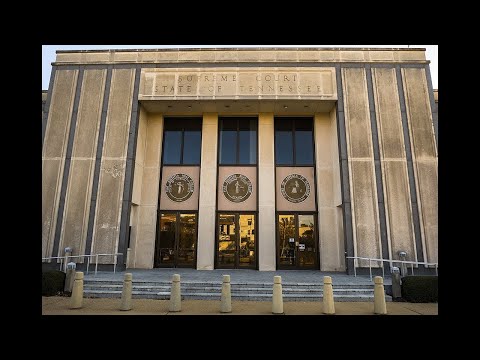
Tennessee high court hears dispute over need for guilty-plea transcript after appellate dismissal
Loading...
Summary
May it please the court. Appellant's attorney Robert Suryani told the Tennessee Supreme Court that the Court of Criminal Appeals erred in dismissing his client's sentencing appeal solely because the appellate record did not include a transcript of the guilty-plea colloquy.
May it please the court. Appellant's attorney Robert Suryani told the Tennessee Supreme Court that the Court of Criminal Appeals erred in dismissing his client's sentencing appeal solely because the appellate record did not include a transcript of the guilty-plea colloquy.
Suryani argued the appeals court relied on Miller in dismissing the case instead of applying the "case-by-case" approach articulated in Caudle, and he asked the court to reverse the dismissal or, alternatively, to supplement the appellate record sua sponte under Bristol with the guilty-plea transcript and remand to the Court of Criminal Appeals. "I'd like the court to issue an opinion saying that the reliance on Miller was improper," Suryani said, and that the Court should "supplement the record with the guilty plea transcript, send that to the court of appeals, and let them make the decision." (Robert Suryani, oral argument, 00:08:15)
The State, represented by Will Lundy, told the justices the Court of Criminal Appeals reasonably concluded the record was inadequate to permit meaningful review because several of the issues raised depended on the factual basis for the plea. "The record was inadequate, it did so reasonably," Lundy said, noting that the sentencing transcript and other materials are robust but that the missing plea colloquy could bear on factual questions such as possession of a firearm or intent to sell drugs. (Will Lundy, oral argument, 00:14:55)
Justices questioned both sides about waiver doctrine and harmless-error analysis. One justice cited Hoover v. State and queried whether a knowing, voluntary plea waives irregularities in offender classification or eligibility for alternatives such as probation. Suryani conceded his client was not challenging the nine-year term itself but contended the enhancement that led to denial of probation and the offender-classification treatment were at issue. "We're challenging the manner of...the result," Suryani said, distinguishing a challenge to the agreed length of the sentence from a challenge to how the court applied enhancements. (00:03:45)
The court also probed whether the guilty-plea colloquy would meaningfully address the uncharged conduct relied on at sentencing or whether such considerations would appear only in the presentence report and sentencing hearing. Lundy acknowledged the plea colloquy might not include discussion of an uncharged offense but said the colloquy could contain the factual basis for the plea claims the defendant raised on appeal.
A separate, procedural concern arose about Count 8 on the judgment form. Justices observed that the sentence imposed on that count appears to exceed the statutory maximum for the felony class reflected on the form, creating a potential jurisdictional or clerical error the Court of Criminal Appeals could be obliged to address even if the defendant did not explicitly raise it on appeal. The State urged that, at minimum, any resolution should include correcting the judgment form on remand. (Will Lundy, oral argument, 00:31:10)
Neither side asked the Supreme Court to decide the sentencing merits at oral argument in place of the Court of Criminal Appeals; the State said the Supreme Court could do so for reasons of judicial economy or alternatively remand with instructions to address the issues under Caudle. The justices took no dispositive action at the conclusion of argument; the docket was concluded and the clerk verified the record. (Clerk verification, 00:32:09)
Why this matters: the threshold question before the court is procedural but consequential: whether a missing guilty-plea transcript justifies dismissal of a criminal appeal or whether appellate courts should employ a case-by-case assessment and, where possible, allow the record to be supplemented so a merits review can occur. The court's choice will determine how strictly appellate courts treat omissions in the record and whether appellants may be barred from review for procedural gaps that attorneys say are curable.
No ruling was announced at the close of oral argument.