
Tennessee justices probe whether final agency review offers an "adequate remedy" in James Wade Construction dispute
Get AI-powered insights, summaries, and transcripts
Subscribe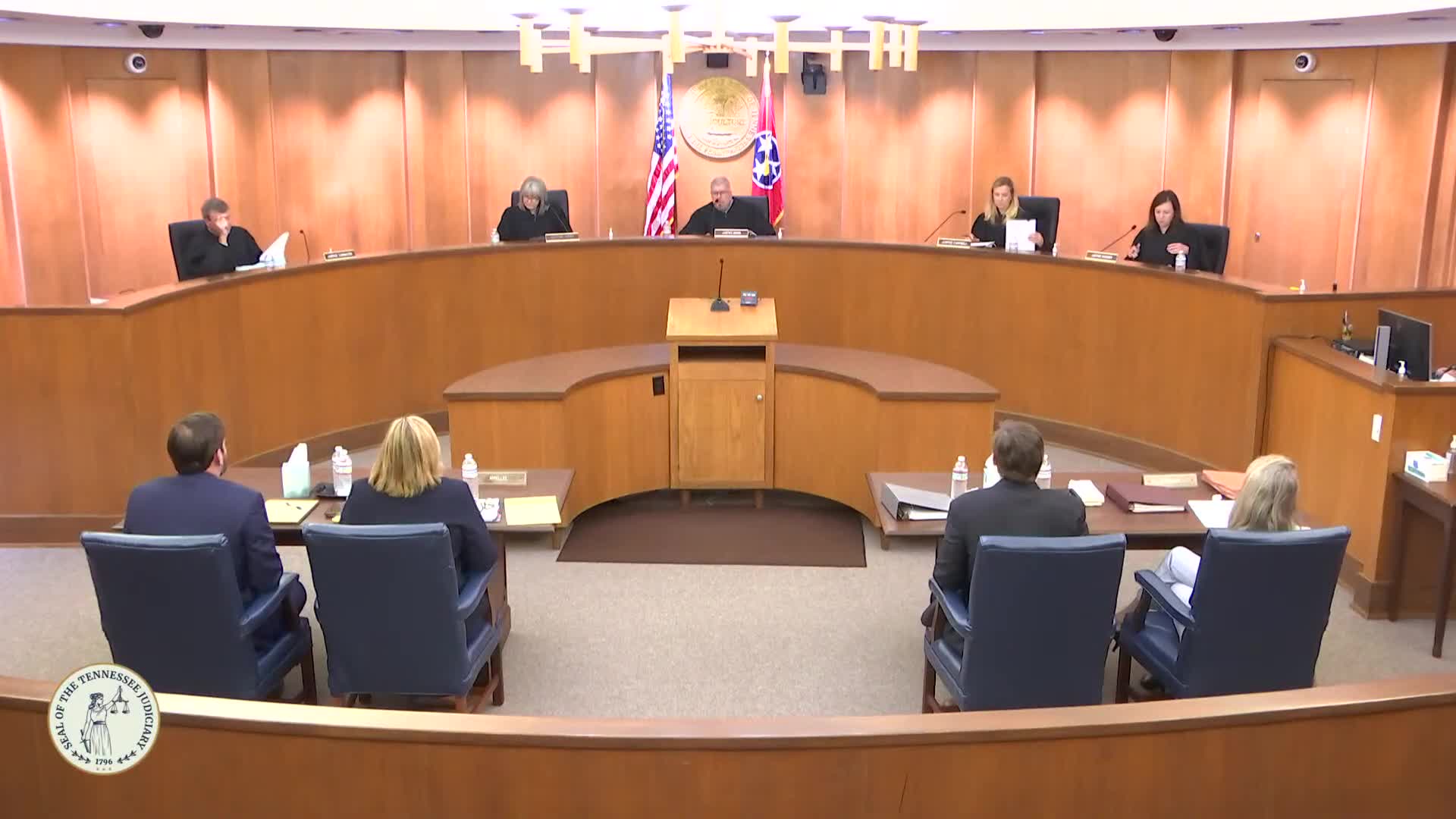
Summary
The Supreme Court of Tennessee heard argument in James Wade Construction Inc. v. Tennessee Department of Environment and Conservation on whether the Chancery Court had subject-matter jurisdiction to review an interlocutory administrative ruling and whether judicial review of a final agency decision would provide an "adequate remedy." Harrison Kilgore of the Tennessee Attorney General's Office told the court that "in a case where a petitioner can obtain the same relief that they are seeking on an interlocutory basis on final review and they have not articulated any form of irreparable harm ... that is an adequate remedy."
The Supreme Court of Tennessee heard argument in James Wade Construction Inc. v. Tennessee Department of Environment and Conservation on whether the Chancery Court had subject-matter jurisdiction to review an interlocutory administrative ruling and whether judicial review of a final agency decision would provide an "adequate remedy." Harrison Kilgore of the Tennessee Attorney General's Office told the court that "in a case where a petitioner can obtain the same relief that they are seeking on an interlocutory basis on final review and they have not articulated any form of irreparable harm ... that is an adequate remedy."
Kilgore urged the court to treat this dispute as falling at the "easy" end of the adequacy spectrum, distinguishing it from cases involving sovereign immunity or compelled disclosure of privileged materials — situations he said are effectively unringable and thus require earlier judicial review. He argued that upon final review a court would have de novo authority to decide the same statutory question and, if successful, would afford Jamesway the identical relief it seeks now.
Jamesway's counsel, Autumn Gentry, responded that delay, cumulative attorney fees, and alleged violations of procedural rights after seven years of litigation mean final review would not be adequate in this case. Gentry said the State "appealed a final order, which it is not permitted to do under the water act," and that the combination of prolonged delay and an asserted agency overreach has denied Jamesway a meaningful hearing in a reasonable time.
Justices repeatedly probed both sides about limiting principles for adequacy: whether the inquiry requires showing irreparable harm, whether uniformity of decisions or judicial economy should affect the analysis, and whether the agency's mission or collateral-order analogies matter. Kilgore pointed the court to case law (including Excalibur) and argued that routine delay or litigation expense alone do not make final review inadequate if identical relief is available on final review. Gentry said adequacy is a multi-factor inquiry and that the facts here — including the State's posture and the length of proceedings — weigh against requiring Jamesway to complete the administrative process before obtaining judicial review.
Neither side identified a binding statutory or constitutional bar that would resolve adequacy as a matter of law at oral argument. The transcript records extensive questioning but no decision or formal ruling on subject-matter jurisdiction or the adequacy question in the portion provided. The court then heard rebuttal and moved to the next calendar item.