Get Full Government Meeting Transcripts, Videos, & Alerts Forever!
Get email alerts on the Trade And Economy topic
No spam. Unsubscribe anytime.
Nogales port authority outlines rail, power and I‑19 planning to keep border corridor competitive
Summary
The Greater Nogales–Santa Cruz County Port Authority told the council it is pushing for rail access protection, power reliability upgrades and I‑19 interchange planning while expanding outreach to federal and international partners.
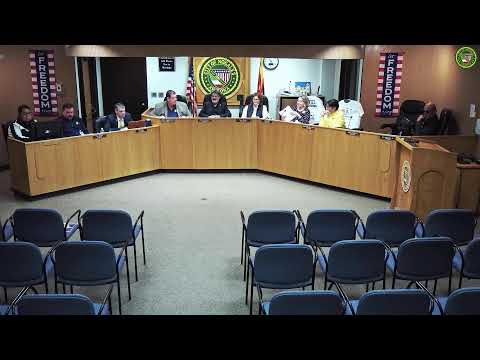
Josh Rubin, chairman of the Greater Nogales–Santa Cruz County Port Authority, told the Nogales City Council on Nov. 5 that the authority has been active on rail, electric reliability and corridor planning to keep Nogales positioned as a vital North American trade gateway.
Rubin said the authority issued a letter supporting the Union Pacific–Norfolk Southern merger "to make sure Nogales was not forgotten in the process," arguing rail access is "vital to our competitiveness." He also said the authority sent a letter supporting UniSource’s Santa Cruz North Reliability Project, which adds a second circuit on an existing transmission line to increase capacity and reduce outage risk without new land impacts.
Why it matters: Rail and reliable electric service underpin the city—s warehouses, produce distributors and freight operations. Rubin told the council the Port Authority is working to ensure infrastructure and permitting proposals reflect Nogales—s needs.
On transportation, Rubin said the authority is engaging Arizona Department of Transportation multimodal planning and Mexican counterparts on a modernization of the I‑19 interchange at Ruby Road and Rio Rico Drive. He said the port authority is pushing ADOT to consider multimodal alternatives—including rail, truck and logistics—so Nogales remains competitive with sister states.
Rubin described outreach to raise Nogales—s profile, saying the authority hosted an international press delegation and met with federal and foreign diplomats. He also said the authority is coordinating regionally: "We joined forces with our sister ports of Douglas and San Luis" and are working with the Arizona Commerce Authority and congressional delegations to advocate for funding and planning.
Council members pressed Rubin on coordination with other local partners and project timing. Councilwoman Montiel noted the city currently funds the port authority $50,000 annually and asked how the authority coordinates with the Chamber of Commerce; Rubin said the chamber sits as an ex‑officio member and that the port authority focuses on infrastructure and recruitment while the chamber handles business attraction and tourism.
Rubin provided a timeline for planned port‑of‑entry work: a feasibility study is complete and an environmental impact statement (EIS) is expected to follow; he said construction would be "at least five years out" after funding and approvals, and that a three‑phase program could take seven to 10 years from start to finish with estimated costs in the low billions for port and related infrastructure.
Rubin also discussed a Santa Cruz County economic development director position the county plans to fund initially; he said the port authority expects the new director to coordinate with city and chamber officials on recruitment and infrastructure alignment.
"Nogales isn—t just part of our mission. It is our mission," Rubin said. "Everything I share tonight reflects how we're working together to strengthen this community's position as one of the most vital border gateways in North America."