Get Full Government Meeting Transcripts, Videos, & Alerts Forever!
Get email alerts on the Criminal Justice topic
No spam. Unsubscribe anytime.
District attorney says understaffing and rising digital evidence volumes slow prosecutions
Summary
District Attorney Becky Spangler told council her office faces chronic understaffing and a large increase in digital evidence that slow discovery and delay case disposition.
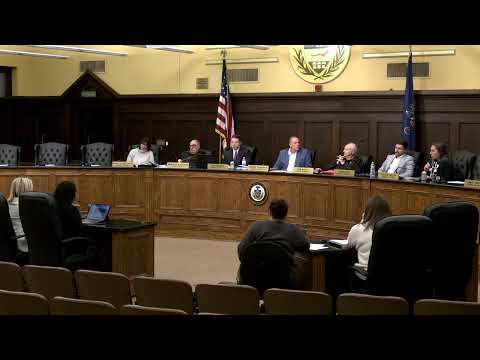
District Attorney Becky Spangler told Allegheny County Council that chronic understaffing and a rapid increase in digital evidence are delaying prosecutions and extending pretrial timelines.
“Because of our understaffing, that puts a lot of burden on the people who are here,” Spangler said in the hearing, describing high turnover, long hours and the difficulty of retaining attorneys who leave for federal and other positions. Spangler said the office is on track to receive roughly 10,000 new criminal informations this year from magistrate district judge (MDJ) offices and stressed that staff shortages make it harder to cover preliminary hearings, arraignments and bail motions across the expanded criminal court calendar.
Spangler focused considerable attention on discovery work. She described a surge in video evidence — body‑worn cameras, dash cameras and surveillance footage — and said some complex cases can include “up to a hundred hours of video that has to be viewed” and redacted before defense counsel receives it. The office previously used grant‑funded digital‑evidence software; the grant expired and the county now funds the licensing. Spangler said the software (referred to as NICE in the presentation) helps but that the volume of material is the bottleneck. She said the office requested a dedicated digital evidence coordinator whose sole job would be to expedite intake and processing of digital files from police departments.
Council members asked about tracking civil settlements tied to prosecutions; Spangler said the county itself was not a party to a recently reported $425,000 settlement tied to a 2016 Wilkinsburg case and that those questions should be directed to the solicitor or the specific parties. Members also pressed on bail and jail population policy. Spangler said earlier disposition — and diverting eligible people to programs such as mental‑health and competency courts — helps reduce jail days, which she said costs the county roughly $95 per day and creates additional burdens when defendants are incarcerated longer than necessary.
On specialized enforcement, Spangler said the office is working to create an elder‑and‑dependent‑person abuse unit modeled on existing child‑abuse intake protocols so that reports routed through the state would be reviewed by DA‑trained staff who can identify potential criminal conduct, including financial exploitation. She also said the office supports early diversion and specialty courts for appropriate cases.
Spangler said the office had requested additional personnel in its budget and that proposed cuts to those positions would make it harder to staff courthouses and cover cases, particularly as the court system gains judges in the criminal division.
No formal votes occurred during the presentation; council members requested follow‑up materials and offered to work on staffing, attrition metrics and potential county support for digital‑evidence processing.