Prince William County Schools highlights $82.7 million in avoided energy costs, outlines geothermal, solar and EV plans
Loading...
Summary
Officials presented a year-end sustainability update showing $82.7 million in avoided energy costs since 2012, recent geothermal and LED projects that lowered building energy use, and near-term plans including Phase 2 solar, an electric vehicle pilot for work fleet vehicles and a net-zero target for the Occoquan Elementary replacement.
Prince William County School officials told the board on Nov. 5 that the division's energy and sustainability program has produced significant cost and emissions reductions while embedding environmental literacy into classrooms.
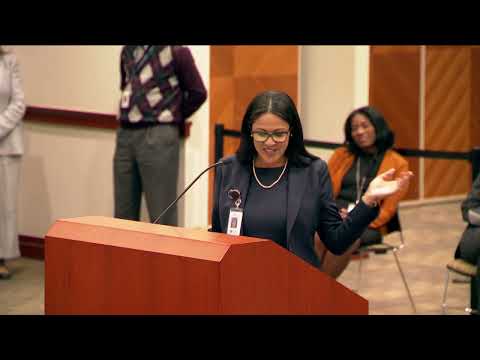
"Our work is grounded in a comprehensive set of policies and regulations," Jessica Wymer, supervisor of energy management and sustainability, said as she summarized the division's three program pillars: build efficient infrastructure, conserve resources and reduce waste. "My team believes that every school can be a green school." Wymer led a data-rich presentation that division staff said supports both operational savings and student learning.
The report said PWCS has achieved about $82,700,000 in avoided energy costs since the program began in 2012 and noted division-wide decreases in energy cost and energy use per student. Wymer highlighted tangible investments and outcomes: the district placed its first geothermal HVAC system in service at Bellaire Elementary (reporting a roughly 65% reduction in energy costs at that school), completed LED lighting upgrades at multiple sites, and implemented small-scale retro-commissioning and automation-control optimizations that lowered energy costs at targeted schools.
Officials also described education and engagement work. PWCS rebranded its student energy challenge as EcoQuest; 63 schools participated this year. The division held a student Environmental Action Showcase featuring 94 projects from 275 students and reported multiple recognitions: Forest Park High School earned a national Eco-Schools green flag, Belmont Elementary was a Virginia Green Ribbon honoree, and 30 PWCS schools were honored through Virginia Naturally—more than any other division in the Commonwealth.
Looking forward, Wymer listed continuing LED upgrades, additional retro-commissioning, a Phase 2 for solar installations, a small electric-vehicle pilot for white fleet vehicles (work fleet, not buses), development of an emissions-reduction plan, and expanded waste-reduction and composting initiatives. The division is also designing the Occoquan Elementary replacement to be net-zero energy.
Dr. Sean Spence, chair of the Superintendent's Advisory Council on Sustainability, urged budget and infrastructure planners to embed sustainability into capital projects and to expand outdoor-learning environments that research links to student well-being and achievement. "These recommendations are not just paper goals; they are active projects creating real change across the division," Dr. Spence said.
Board members asked about the pace and selection of geothermal projects. Wymer said feasibility studies are under way; Bellaire was a retrofit success and geothermal is easier to include in new-construction or major renovation projects but remains site-dependent. The division said it will prioritize geothermal and other high-performance options at candidate renovation and construction sites.
The presentation and Q&A concluded with staff describing next steps for integrating sustainability in capital planning and curriculum and for continuing to report metrics to the board.