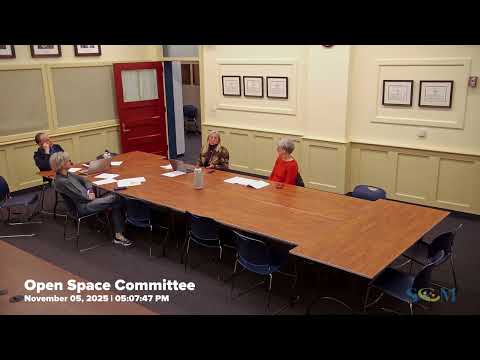
Simsbury open-space committee raises environmental and process questions about proposed Curtis Park turf project
Loading...
Summary
The Simsbury Open Space Committee spent the largest portion of its meeting discussing proposals for artificial turf and other improvements at Curtis Park and whether the committee should take a formal role as the project moves through town review.
The Simsbury Open Space Committee spent the largest portion of its meeting discussing proposals for artificial turf and other improvements at Curtis Park and whether the committee should take a formal role as the project moves through town review.
Members said they have seen conceptual engineering and fundraising plans that include turf, paving, lighting, a snack shack and playground elements, and raised repeated environmental and procedural concerns tied to the park’s location near the river and in a floodplain. “This is a flood plain next to the wild and scenic river and is not the place for this kind of stuff,” a committee member said during the discussion.
Why it matters: Members said Curtis Park appears on town maps as a park/open-space parcel and noted that the park’s proximity to regulated wetlands, alluvial soils and the river means some proposals could trigger inland-wetland review. Committee members emphasized that capital improvements — including a turf installation — would also require land-use approvals and that the town, at several steps, could refuse permission.
Discussion and process questions: Committee members described an existing seasonal schedule in which a local soccer organization has priority access from March through November; that group has contributed past capital improvements and sought assurances that future investments would not be undermined by reallocation of scheduling. Members explained that the organization negotiated primary access to protect fundraising and sweat-equity investments, but that the town retains ownership and could deny any permit or project at the land-use stage.
Environmental concerns and technical options: Speakers noted two separate environmental risks: (1) a turf field in a floodplain could release infill or other materials if a hundred-year flood occurred, and (2) replacing vegetated ground with impervious or semi-pervious materials can reduce habitat and increase runoff near a “wild and scenic” river corridor. Committee members discussed alternatives to traditional crumb-rubber turf — including organic infill or newer infillless systems — but said those technical options do not remove the need for full environmental review.
Where authority lies: Several members said turf policy itself is generally within the purview of zoning, planning and inland-wetlands boards; however, they argued the Open Space Committee has an interest because the parcel is mapped as town open space. Members suggested the committee monitor related proposals in other Connecticut towns and signaled they would follow any application through the referral process so the committee could offer formal comments when invited by land-use bodies.
Next steps: Committee members asked staff to watch pending proposals and to ensure that, if a formal application or exclusive-use agreement is presented to the board of selectmen or a land-use body, the Open Space Committee is notified and offered a referral. A member also asked staff for clarification on how exclusive-use and volunteer-maintenance agreements are structured so the committee could assess whether public notice and an RFP process were required.
Ending note: No formal action was taken by the committee on the Curtis Park proposals at the meeting; members instructed staff to monitor developments and to request formal referrals if and when permit applications are filed.