
Waterbury reports modest summer gains; summer internships and credit recovery cited as successes
Get AI-powered insights, summaries, and transcripts
Subscribe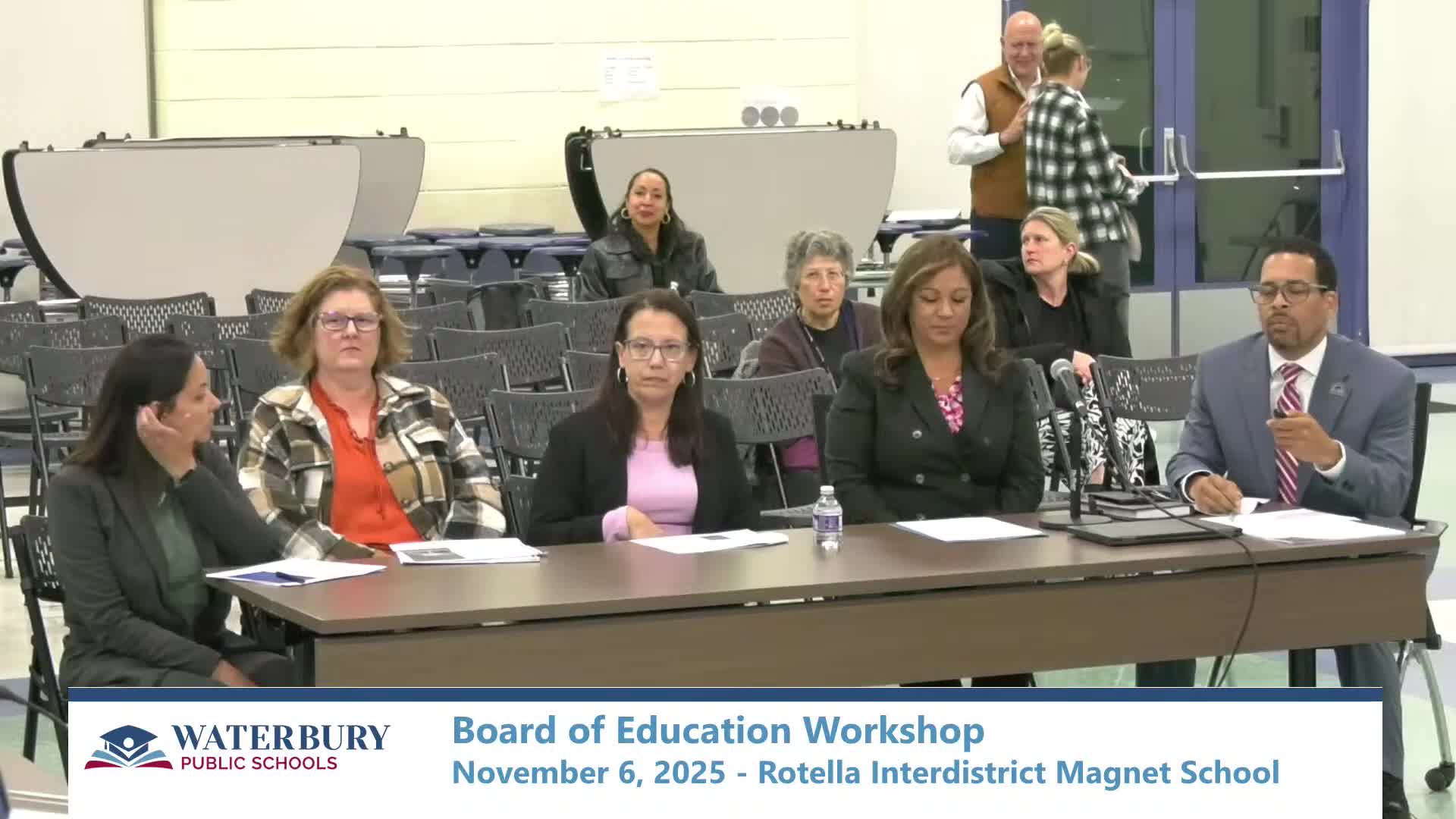
Summary
Waterbury Public Schools reported that summer learning and career-readiness programs recorded solid attendance and measurable benefits, with summer attendees showing smaller declines on district benchmark tests than non-attendees.
Waterbury Public Schools presented an update on summer learning programs on Nov. 6, reporting participation, attendance and early analyses of program effects on student benchmarks.
Elementary extended academic support (EAS) registered just over 1,100 students in grades K—, a modest decline from last year's roughly 1,300. District staff reported regular attendance rates of at least 70% and said second grade had the largest enrollment and strong attendance. "This allows us to make the inference that our summer school instruction is effective," a district presenter said after staff explained a means-comparison analysis using end-of-year and beginning-of-year district benchmarks.
District staff said on average students declined between end-of-year and the following beginning-of-year benchmark, but the decline was smaller for students who attended summer programming. In literacy, the overall decline was 112 points from end-of-year to beginning-of-year, with non-attendees declining more than attendees; for math, attendees declined roughly 5 points while non-attendees declined about 6 points. The district reported both findings reached statistical significance and described the results as evidence of a positive, measurable effect from the summer programs.
Middle-school summer school targeted students at risk of retention; of 111 recommended students who registered, 108 attended (97% of registrants). Staff reported that among middle-school attendees, roughly 98% achieved proficiency required to move on to the next grade in their summer courses.
Program coordinators highlighted internships and pathway programs: approximately 28 students participated in health-care internships with local hospitals and clinics; city-department internships offered students hands-on experience (one student who worked with the water department described a newfound pride and practical skills). An Early College High one-week program at Post University included 24 students and entrepreneurial activities.
High school summer credit-recovery was smaller this year and charged a fee per course; district staff reported all participating students earned credit and six seniors graduated via summer coursework. District staff and board members raised affordability concerns about charging for credit recovery and discussed the program's role in helping students graduate.
Superintendent Dr. Schwartz and board members praised staff for program implementation and noted that smaller class sizes, targeted instruction and certified teachers contributed to the summer gains. The board did not take a formal vote on the summer-learning report; staff said they will continue to refine analyses and examine whether gains persist during the following school year.