Get Full Government Meeting Transcripts, Videos, & Alerts Forever!
Get email alerts on the Criminal Justice Sales Tax topic
No spam. Unsubscribe anytime.
Wenatchee adopts one‑tenth percent criminal justice sales tax to shore up public‑safety costs
Summary
The Wenatchee City Council adopted Ordinance 2025‑12 to add a one‑tenth of one percent criminal justice sales tax, projected to generate roughly $1.2 million in 2026 and $1.6 million in future years to offset rising jail and public‑defender costs. The tax takes effect April 1, 2026, pending state review.
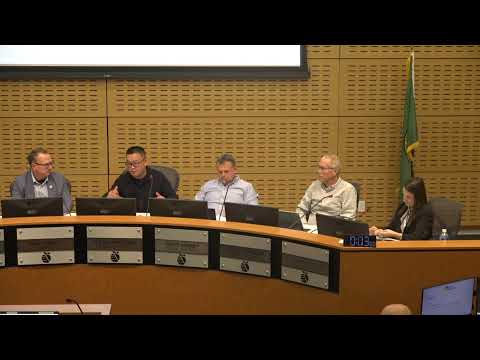
Wenatchee City Council on Nov. 6 adopted Ordinance 2025‑12 to implement a one‑tenth of one percent criminal justice sales tax, a measure the city says is necessary to cover rising jail and public‑defender costs and to preserve current public‑safety service levels.
The ordinance, authorized under state law cited in the ordinance as section 201, chapter 350, Laws of Washington 2025, adds 0.1 percentage point to the city sales‑tax rate. Finance staff estimated the new tax would raise about $1.2 million in 2026 (partial year if adopted) and about $1.6 million annually in subsequent years; staff estimated the median Wenatchee household would pay roughly $20 per year in additional sales tax under the measure.
Finance staff and police command briefed the council before the vote. Staff said two primary cost pressures informed the proposal: a proposed county jail contract increase (presented as growing from $1.6 million toward $2.7 million) and substantial increases in the public‑defender contract driven by recent state caseload limits. Staff also noted the expiration of a traffic‑safety grant that had previously funded 2.5 FTE for enforcement.
Wenatchee’s police chief (unnamed in the record) and other law‑enforcement staff described the Criminal Justice Training Commission (CJTC) and reporting requirements tied to the tax. Staff said the city must complete an application and satisfy certification items; the CJTC has a 45‑day review window and the city would have up to 180 days to address any items the state flags. The chief said the police department’s accreditation work positions it to meet the requirements, and that one required training will be completed when the state makes it available.
Supporters and opponents of the tax spoke during the public hearing. Tara Shuttleworth asked the council to ensure clear, accessible messaging for residents about the measure’s costs and effects. Josh Tarr, speaking as a downtown business owner and Wenatchee Downtown Association board chair, urged support, saying public safety supports the city’s economy.
Councilmember Harold moved adoption of Ordinance 2025‑12; Councilmember Cuevas seconded. The ordinance was adopted by voice vote. Staff said the ordinance would be submitted to the Department of Revenue and, if approved through the required processes, would take effect April 1, 2026.
The ordinance establishes a new chapter in the Wenatchee City Code (chapter 5.115) with reporting obligations on the city website describing how revenues were spent. Staff said the city will track expenditures and post reports as required by the enabling legislation and the ordinance.