Get Full Government Meeting Transcripts, Videos, & Alerts Forever!
Get email alerts on the Procurement Policy topic
No spam. Unsubscribe anytime.
Corte Madera introduces update to purchasing ordinance; raises some bid thresholds, adds green-buying incentive
Summary
The Corte Madera Town Council on Nov. 4 voted to introduce changes to the town's purchasing ordinance to clarify approval thresholds and incentivize purchases that meet the town's Environmentally Preferable Purchasing Policy.
The Corte Madera Town Council on Nov. 4 voted to introduce an ordinance updating the town's purchasing procedures, clarifying approval thresholds and incorporating the Environmentally Preferable Purchasing Policy (EPPP).
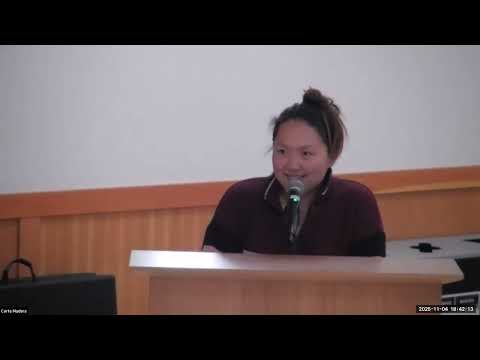
"The main purpose of the purchasing ordinance is to establish efficient procedures for the purchase of materials, supplies, equipment, and services at the lowest possible cost, commensurate with the quality needed, and to clearly define authority for the purchasing function," Town Manager Adam said while presenting the staff report. Adam said the changes are intended to reduce ambiguity in who must approve purchases and to streamline procurement processes that predate current practice.
Key proposed changes described in the staff report include:
- Explicit council-approval thresholds and higher competitive-bidding thresholds; most notably, the draft sets $100,000 as the general threshold for town-council approval of formal contracts, raised from $75,000 in prior practice.
- Incorporation of the town's Environmentally Preferable Purchasing Policy (EPPP) with a 5% evaluative preference: bids from vendors that meet the EPPP or are local vendors may be treated as effectively 5% lower for the purposes of determining the lowest responsible bidder.
- Elimination of outdated procedural language and publication requirements that no longer reflect current purchasing systems.
- An explicit prohibition on bid-splitting (structuring purchases to avoid a higher threshold).
Council members asked procedural questions about the town's "vendor catalog," the centralized purchasing office and whether the ordinance gives priority to local or minority-owned vendors. Staff said the vendor catalog is the town's active vendor list in its finance system and that the ordinance as written does not include an express priority for local or minority-owned firms.
A motion to introduce the ordinance carried on a unanimous roll-call vote. The introduction advances the ordinance to a future meeting for formal adoption and any additional edits following public review and staff recommendations. The staff report and a redline version of the proposed ordinance were included as attachments in the meeting packet.