
Findlay council sends contested loitering ordinance to committee after public outcry
Get AI-powered insights, summaries, and transcripts
Subscribe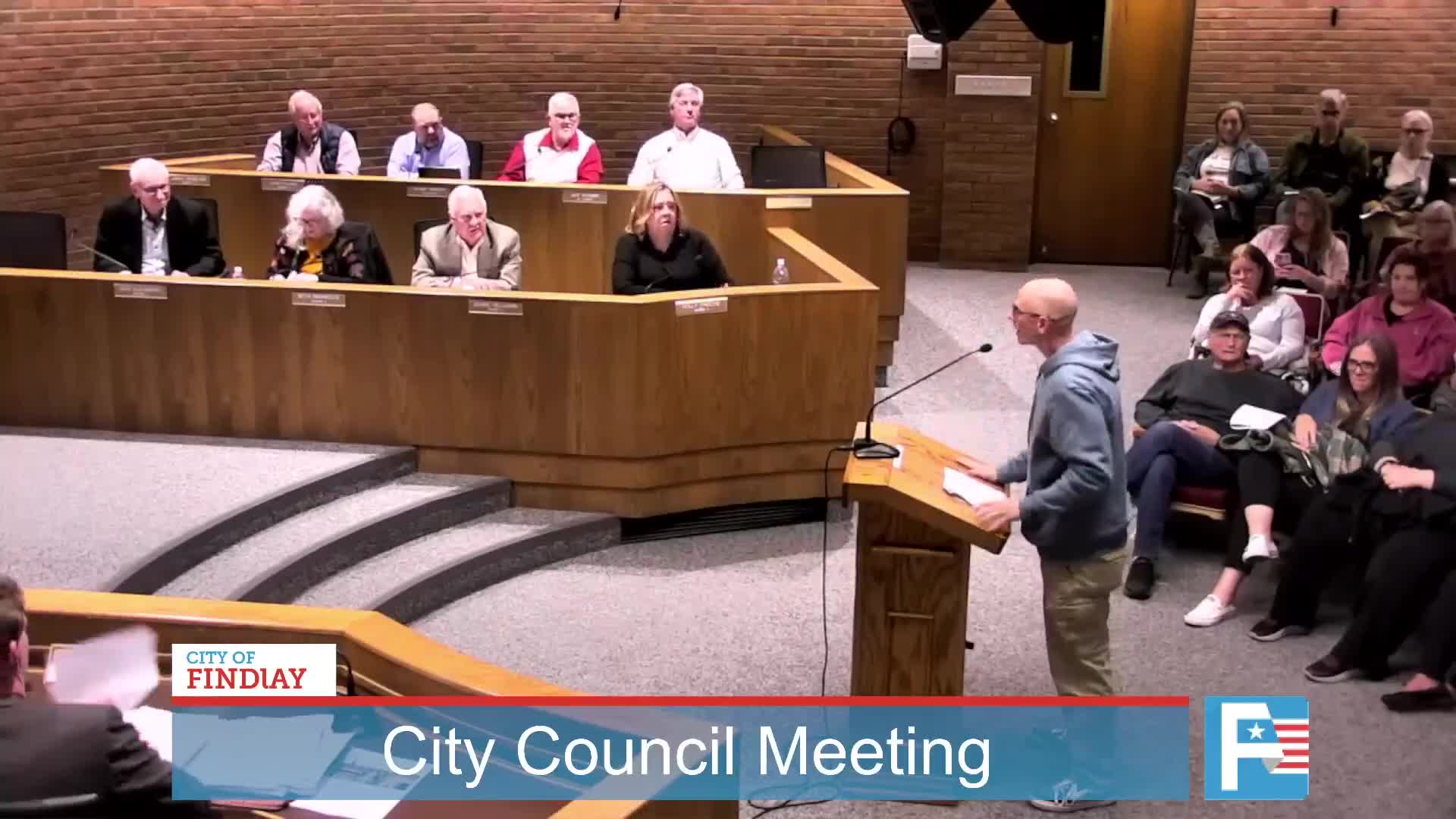
Summary
Council members voted on Nov. 5 to send the city’s proposed unlawful-congregation (loitering) ordinance (Ord. 20‑25‑134) to a Committee of the Whole for redrafting and additional public input after extended public comment and legal concerns.
Council members voted on Nov. 5 to send the city’s proposed unlawful-congregation (loitering) ordinance (Ord. 20‑25‑134) to a Committee of the Whole for more drafting and public input after an extended public-comment period and debate. The motion to refer won after councilors expressed concern about vagueness and potential constitutional exposure and the administration said it would prepare revised language.
Advocates for the draft and several downtown business owners said council needs a tool to address people repeatedly occupying sidewalks and doorways near businesses and the library and to respond when long-term presence creates an unsafe or uncomfortable environment. Jill Wagner, chair of the Downtown Findlay Improvement District and a downtown property owner, told council she has witnessed people “leaving trash, including drug paraphernalia,” and said that visible groups lingering near businesses can deter patrons and renters.
Opponents and civil‑liberty advocates argued the ordinance as drafted is constitutionally vague and risks costly litigation. Robbie Leatherman, representing legal advocates, reviewed Supreme Court decisions that struck down broad loitering or vagrancy laws and said the proposed language “criminalizes thinking, waiting, or, heaven forbid, existing without clear intent,” and would expose the city to 42 U.S.C. § 1983 suits and attorney‑fee awards. Chris Chokai of Findlay for All and other residents urged the council to address root causes—homelessness and substance-use disorder—rather than criminalize presence in public spaces.
Mayor Mearn and the law director said they take the constitutional concerns seriously and will attempt to draft clearer definitions and enforcement standards that narrow the scope to the conduct the city wishes to prohibit. The mayor described a recurring local situation: a group standing outside a children’s music school who, while not trespassing or committing a crime, drew complaints for their prolonged presence and sometimes smoking. The administration said officers have limited options under current ordinances short of trespass or criminal acts.
Council voted to send the ordinance to a Committee of the Whole for revision and public input; a committee meeting to consider the draft was scheduled for Wednesday, Nov. 12 at 6:00 p.m. The administration agreed to revise the draft language and to present proposed amendments before the committee. The council instructed staff to incorporate public comments and constitutional concerns into the next draft.
What happens next: The Committee of the Whole will review a revised draft, incorporate public feedback and legal edits, and return recommended language to council. Any subsequent ordinance will require additional readings before final adoption.