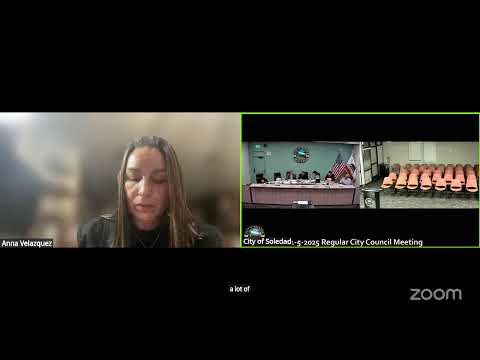
Soledad Council adopts 2025—2030 strategic plan, asks quarterly progress reports on urgent goals
Loading...
Summary
The Soledad City Council unanimously adopted the city—s 2025–2030 Strategic Plan after a presentation from the consultant team, directing staff to provide quarterly progress reports on the plan—s urgent objectives.
The Soledad City Council unanimously approved the 2025–2030 Soledad Strategic Plan after a presentation by the city—s consultant that condensed months of community workshops and staff work into a set of priorities and measurable objectives.
The plan, prepared with assistance from the University of Kansas public‑management team, lays out an implementation framework organized by guiding pillars (economy, housing, environmental justice and equity, community places, mobility, safety, youth, health and internal operations). Councilmembers asked staff to track urgent objectives more frequently, and the city manager agreed to provide quarterly updates on tasks designated as "urgent" (those the plan lists as 12–18 month priorities).
Why it matters: The five‑year plan is intended to align budget choices, capital projects and staffing with the council—s priorities, giving staff and partners a single operational roadmap. It identifies immediate next steps the city expects to pursue in areas such as downtown revitalization, pipeline housing projects, pedestrian safety and community‑facility improvements.
Highlights and next steps
- Economy: The plan directs staff to pursue steps intended to attract and retain living‑wage employers, support small‑business retention, and advance downtown placemaking (including a container‑village concept identified as a potential small‑business incubator).
- Housing: The strategic plan lists pipeline actions (Gavilan/Parcel projects; Almond Acres) and calls for negotiating development agreements and expanding housing resources for vulnerable residents. Council discussed the housing target in the plan (a multi‑year goal) and asked staff to clarify timelines for projects already in the entitlement pipeline.
- Community places and public safety: The plan calls for improved park programming, multi‑generational recreation and lighting and pedestrian improvements to make public spaces safer and more usable.
- Implementation: The plan includes a live tracking workbook (an internal dashboard) that assigns responsible parties, estimated start and end dates, and a Gantt view for council review. Staff will return with a short, public facing summary and the dashboard under a proposed reporting cadence that treats "urgent" items with quarterly updates and "semi‑urgent" items on a six‑month cycle.
What the consultant said: Alex Williger, the consultant from the University of Kansas, told the council the document is a "living" plan and stressed that success depends on embedding the priorities into the city—s budgeting, capital program and routine reporting. The consultant asked the council to consider a consistent update cadence so the community can track progress.
Council direction and vote
Councilmembers offered a handful of small wording requests and asked staff to incorporate clarifying language on workforce development, small‑business displacement protections and maintenance of agricultural buffers where relevant in annexation discussions. The council then voted to adopt Resolution No. 63 01 (the strategic plan), with amendments discussed in the meeting.
What to expect next
Staff will produce a shorter public summary of the plan, create the implementation spreadsheet that will be used for tracking, and return at regular intervals as directed by the council to report progress on the plan—s urgent items. The city manager said staff will also present a draft public dashboard for community updates.
Attribution: Consultant remarks and plan structure are drawn from the consultant presentation delivered during the meeting; adoption and amendments were recorded in the council—s roll‑call action.