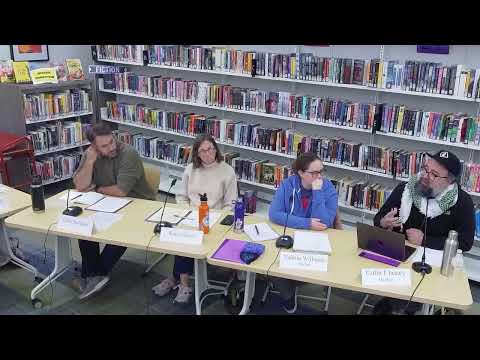
RSU 5 board directs policy committee to draft bell-to-bell ban on personal electronic devices
Loading...
Summary
The RSU 5 Board of Directors voted to direct its policy committee to draft a districtwide "bell‑to‑bell" ban on cell phones and other personal electronic devices after public comment and staff briefings on implementation options.
The RSU 5 Board of Directors voted to ask its policy committee to draft a policy that would implement a bell‑to‑bell ban on cell phones and other personal electronic devices in district schools.
The board’s decision followed public testimony urging a full‑day ban and a lengthy discussion of how such a policy could be implemented, funded and enforced. Speakers at the meeting included Annie Ware of the RSU 5 Alliance for Thoughtful Technology and parent Kelly Delaney, both of whom urged swift action to address the effects of smartphone use on student attention and mental health. The administration described two primary product options discussed by multiple districts: flexible magnetic pouches (Yondr) and a hard plastic “New Case” style locking case; the district estimated the Yondr option at roughly $35,000 with a possible grant offer reducing that to about $20,000 if the district orders by mid‑November.
Board members reviewed example policies and implementation from other Maine districts (including RSU 1 and Portland) where Yondr‑style pouches were in use. Trustees said those districts reported higher compliance after introduction, a staged‑consequence model for repeat violations and some operational tradeoffs such as increased visits to health centers when students could not text parents. Student representatives at the meeting cautioned about cost, fairness and potential circumvention; board members also raised exemptions for medical devices and for documented 504/IEP accommodations.
The motion the board approved instructs the policy committee to draft the policy language; the board also directed the superintendent and staff to work with middle- and high‑school principals to develop procedures and practical implementation plans in parallel. Administrators were asked to explore funding options — including district funds, potential Yondr grants, Title funding and community fundraising — and to report back to the board. The policy committee will bring a draft policy through the board’s normal review cycle.
The board did not take a procurement vote or select a vendor. A board member who moved the motion and another who seconded it were not identified by name in the meeting record. When the motion was put to a vote the board approved it with no recorded opposition.
Why it matters: The board’s directive launches a formal process that can result in a districtwide restriction on student access to personal devices during the school day. If the resulting policy is adopted, it will affect classroom routines, communications and procedures for supervising students and managing medical or safety exceptions.
What’s next: The policy committee will draft policy language and consult principals about operational procedures and timing. Administration will investigate funding sources and implementation logistics and report back to the board.