Get Full Government Meeting Transcripts, Videos, & Alerts Forever!
Get email alerts on the Grease Trap Ordinance topic
No spam. Unsubscribe anytime.
Jacksonville Beach entrepreneur asks council to ease exterior grease-interceptor rule
Summary
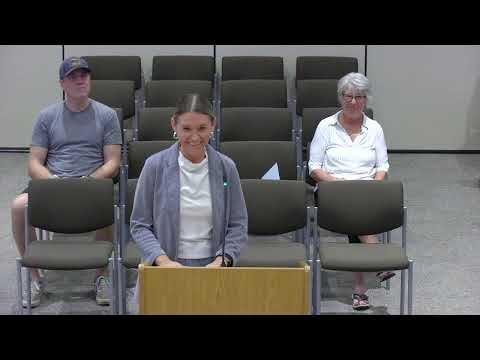
Melissa Senal, who identified herself as owner of a local charcuterie business and a licensed foster parent, told the council she cannot open her storefront because the city requires a grease interceptor to be installed outside the building.
Melissa Senal, who identified herself as owner of a local charcuterie business and a licensed foster parent, told the council she cannot open her storefront because the city requires a grease interceptor to be installed outside the building.
Senal said she started her business in October and that a letter explaining her situation was sent to council members on Sept. 18. "I don't cook anything. The food product that I prepare has minimal to no FOG products," she said, using the common industry term FOG (fats, oils and grease). She asked the council to "revisit ordinance number 2019 81 25," and specifically the line in section 32-1-81(e) and (f) that states the interceptor "needs to be installed and located on the outside of the facility."
The owner told the council that the exterior requirement creates structural obstacles at her site: piping space constraints, insufficient slope to connect to the common sanitary line, and the need to cut concrete and dig trenches that would require reinforcement. "This little added line item makes it impossible for me to operate in compliance with this ordinance," she said.
Senal proposed two changes: allow interior interceptors where exterior installation is infeasible, and adopt tiered requirements that distinguish low-output, limited-service operations from high-output full-service kitchens. She suggested thresholds based on seating, square footage, number of fixtures or grease volume, and asked the council to add a pathway for a variance allowing interior interceptors for small operators.
She told council members she is working with an engineer and a plumbing contractor and hoped to submit plans to the building department by the end of the week. She said the landlords had requested utilities site plans from the city the prior Thursday and had not yet received them, which she called a barrier to completing the grease-trap application. "I'm at your mercy, and I'm pleading for your help and direction," she said.
Senal thanked "Mr. Askew, Mr. Baron, and Mr. Stafopoulos" for contacting city officials on her behalf and said dozens of plumbing professionals had offered advice.
No formal action was taken by the council during the meeting on the grease-interceptor requirement. The item was presented as public comment; staff follow-up and any ordinance changes would require separate council agenda action.