
Co‑teaching, vocabulary and frequent formative assessments highlighted as strategies to accelerate English‑learner outcomes
Get AI-powered insights, summaries, and transcripts
Subscribe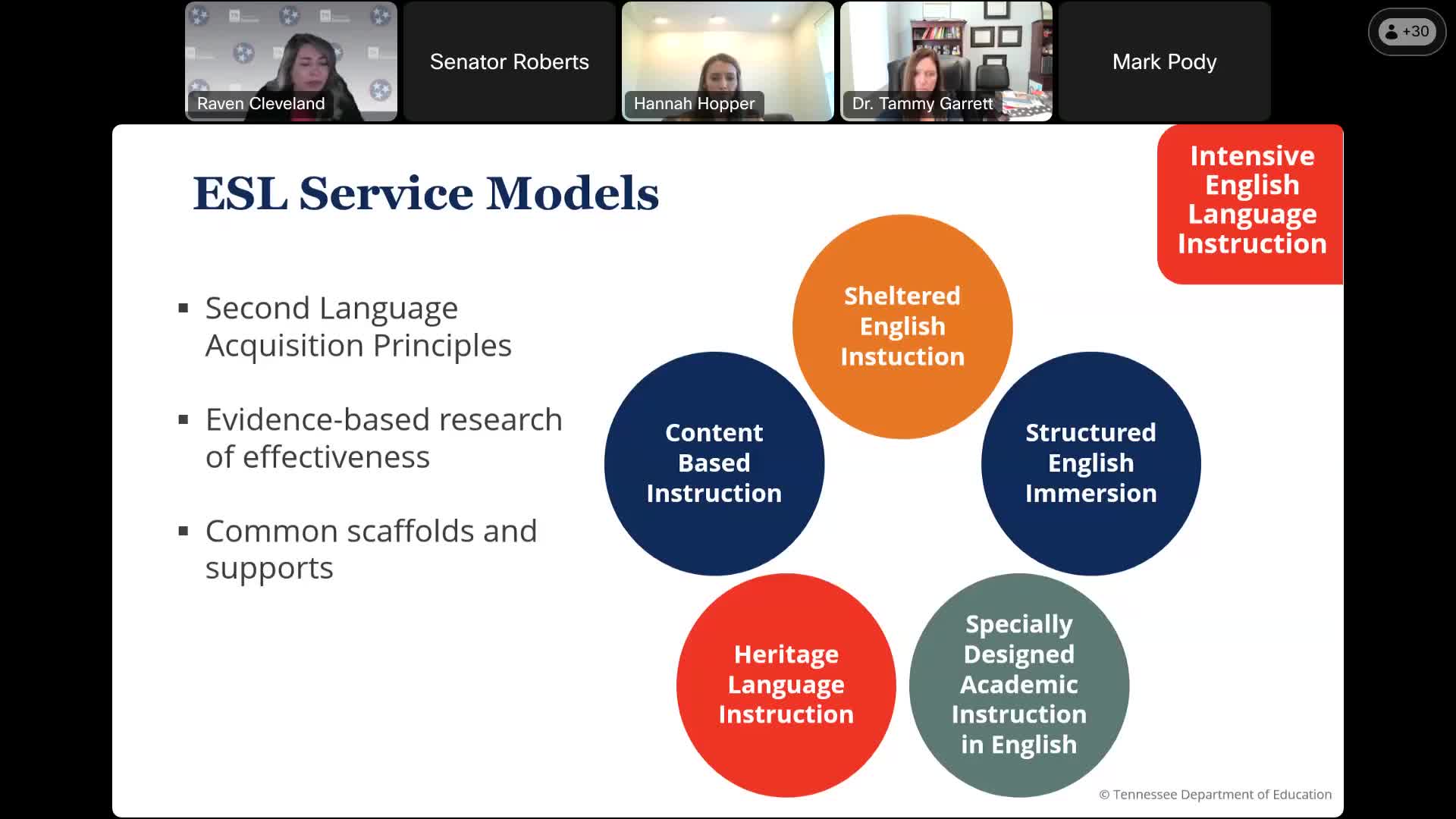
Summary
District leaders told the working group that co‑teaching models, integrated vocabulary instruction and more frequent formative EL language checks led to stronger outcomes than isolated sheltered instruction. Several districts reported higher assessment scores in co‑taught classes and recommended state support for interim EL assessments.
The working group reviewed four state‑permissible models for delivering intensive English language instruction—pull‑out, scheduled ELD courses, co‑teaching and virtual instruction—and emphasized that these models must operate alongside rigorous content instruction in the general classroom.
Raven Cleveland noted that co‑teaching places the ESL teacher inside the content classroom to jointly plan, deliver and assess instruction. She urged the group to integrate collaborative learning, explicit vocabulary instruction and assessment into a cohesive instructional cycle rather than treating each as a separate practice.
District practitioners described local evidence supporting co‑teaching and integrated strategies. "We've noticed that our sheltered instruction classes are performing lower than our co taught sections," Rachel Rochin, director of English language learners for Lehi Public Schools, said, explaining her district’s view that students benefit from peer interactions in co‑taught classes. Several districts reported piloting co‑teaching as a mentoring model, pairing experienced co‑teachers with newer teachers and seeing growth in instructional capacity.
Multiple speakers called for more frequent, EL‑aligned formative assessments. Megan Turnbow (Rutherford County) and others said reliance on a single annual ELPA summative score produces stale data for scheduling and instructional decisions. Districts asked the department to investigate or provide an ELPA‑aligned interim assessment or recommended products districts could purchase to progress‑monitor language growth throughout the year.
Leaders reiterated that scaffolds should be data‑driven, temporary and intentionally faded, aligning with the Instructional Practice Guide core actions. The department and districts agreed to collect additional evidence on model effectiveness and consider state‑level supports for co‑teaching, professional coaching and interim EL assessments.