Get Full Government Meeting Transcripts, Videos, & Alerts Forever!
Get email alerts on the Land Use topic
No spam. Unsubscribe anytime.
Polk County commissioners refer appeal over timber-zone dwelling to hearings officer
Summary
After a staff presentation, the Polk County Board of Commissioners voted to send an appeal of planning file RD 25-10 — a denied application to replace a dwelling in the timber conservation zone — to the Polk County hearings officer for a public hearing.
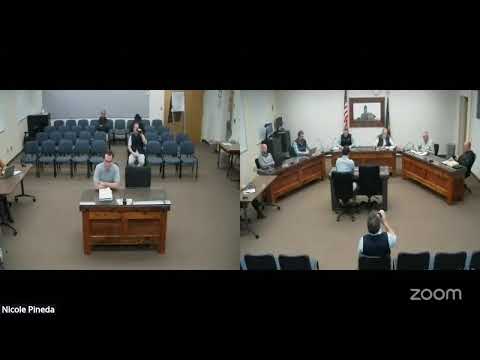
The Polk County Board of Commissioners voted Wednesday to refer an appeal of planning file RD 25-10 to the Polk County hearings officer rather than hear the matter themselves.
County senior planner Eric Knudson told the board the Community Development Department received application RD 25-10 on June 2, 2025, proposing a replacement dwelling on a property located within the timber conservation zone. On Oct. 16, 2025, the planning director denied the application, finding it did not comply with the applicable review and decision criteria. A timely appeal was filed on Oct. 23, 2025, in which the appellant contends that a lawfully established dwelling is a vested dwelling and therefore should not have been denied.
Knudson said county ordinance section 1.11.280 requires the board to determine which hearing body will decide an appeal. Because the appeal raises technical issues and is not, in staff’s view, a matter of countywide policy, staff recommended the board refer the appeal to the Polk County hearings officer for a public hearing.
One commissioner urged the board to retain the hearing, citing the property’s history and precedent for commissioners serving in quasi‑judicial roles, and saying the applicant — described in the meeting as a 72‑year‑old seeking a single‑story home — should have the opportunity to make the case directly to elected officials. Other commissioners said they preferred the hearings officer process, describing it as a neutral, established forum and noting the appellant could seek judicial review after an administrative hearing.
A motion to refer the appeal to the hearings officer was moved and seconded and passed by voice vote, recorded in the meeting as two ayes and one nay. The board chair said, “It passes, and it will go to the hearings officer.” Staff was directed to proceed with scheduling the public hearing before the hearings officer.
The meeting concluded with an announcement that the board would meet in executive session pursuant to ORS 192.660(2)(f) to consider information or records exempt from public disclosure.