Get Full Government Meeting Transcripts, Videos, & Alerts Forever!
Get email alerts on the Search And Seizure topic
No spam. Unsubscribe anytime.
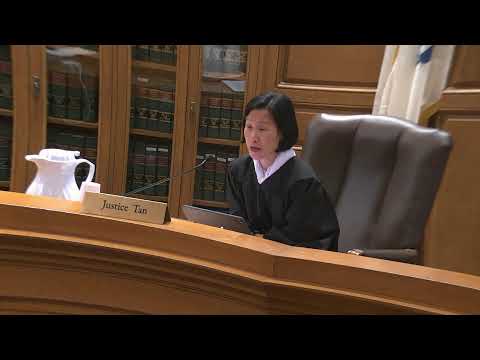
Appeals court weighs suppression claim over exit order, frisk in Commonwealth v. Stewart traffic‑stop appeal
Summary
The court heard an interlocutory appeal challenging lawfulness of a traffic stop, an officer’s order that the passenger exit the vehicle, and the subsequent frisk and searches. Defense counsel argued the officer lacked objective grounds; the Commonwealth responded that evolving facts and training justified safety measures.
Flannery Rogers, arguing for Josiah Stewart, asked the Appeals Court to reverse a trial‑court denial of Stewart’s motion to suppress evidence recovered after a traffic stop. Rogers told the panel the officer’s exit order and pat frisk were not objectively reasonable on the record and that the government’s theory rested on thin factual predicates: nervousness, a corner of a plastic bag seen in the passenger area, and the presence of a cash bundle. Rogers said the pat frisk exceeded its permissible scope and that evidence seized thereafter should be suppressed under governing Massachusetts authority.
The panel pressed about what the body‑worn camera shows and whether the passenger’s movements (shifting in the seat, brief upward motion) and a visible corner of a bag provided sufficient objective grounds to order exit and frisk. Rogers highlighted cases (Commonwealth v. Garcia and Torres) restricting exit orders and cautioned against treating common fidgeting or phone use as grounds for a safety detention.
Elizabeth Sweeney, for the Commonwealth, said the trial judge’s factual findings and the totality of the record — the officer’s observations of tapping at a bulge, seat movement, a visible corner of a cut baggie, a large quantity of cash and the officer’s training in narcotics investigations — supported a reasonable safety concern and justification for limited measures. Sweeney acknowledged questions about whether the officer should have removed and inspected cash after a pat frisk but argued the duration and sequence of investigative steps were proportionate under a deferential review standard.
Justices asked whether the officer’s use of the phone’s screen or manipulation of a device implicated Riley principles about device searches; counsel agreed questions remained about what was shown on the camera and what, if anything, the officer learned from triggering a phone screen. The court also explored whether a subsequent dog sniff or further investigative steps would be treated as searches and whether any consent given after the initial encounter was voluntary.
The panel took the arguments under advisement; resolution will turn on application of recent Commonwealth precedent on exit orders, the objective‑reasonableness standard for pat frisks and whether subsequent investigatory steps were tainted by any constitutional violation.