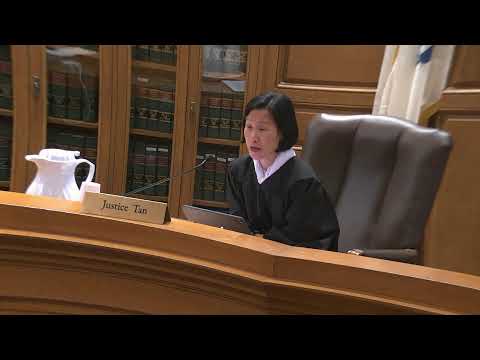
Appeals court hears challenge to sufficiency of evidence in Commonwealth v. Smith second‑degree murder conviction
Loading...
Summary
The Massachusetts Appeals Court heard argument on Nov. 7 over whether the evidence at trial was sufficient to convict Javier Smith of second‑degree murder, with defense counsel calling the Commonwealth’s case a chain of inferences and the prosecutor pointing to a terse, closely timed series of events captured on video.
The Massachusetts Appeals Court heard argument on Nov. 7, 2025 in Commonwealth v. Smith, an appeal that asks whether the evidence at trial was sufficient to support a conviction for second‑degree murder.
Jennifer O’Brien, counsel for appellant Javier Smith, told the panel the appeal raises a single issue: whether there was sufficient evidence to find Smith guilty of second‑degree murder. “This is a single issue argument here,” O’Brien said, arguing the Commonwealth’s case depended on a chain of inferences — from Smith’s presence to the victim’s immediate flight to the subsequent shooting — rather than proof that Smith shared a culpable intent that made a deadly outcome plainly likely.
Kenneth Steinfeld, arguing for the Commonwealth, told the panel the time sequence and video evidence created a tight circumstantial case: the jeep arrived after the victim entered the restaurant; Smith left the vehicle, entered the restaurant briefly, left and then the shooting happened within roughly 98 seconds. Steinfeld urged that the closeness in time and Smith’s conduct — including distinctive clothing, the trip pattern and rapid flight — permitted reasonable inferences about shared intent and consciousness of guilt.
Both sides discussed the standard for joint‑venture or third‑prong malice — whether a defendant’s conduct created “a plain and substantial likelihood” of death under circumstances the defendant knew. Defense counsel emphasized the absence of direct statements or gestures proving shared lethal intent and urged the panel not to permit a conviction based on stacked inferences. The Commonwealth said the totality of events, the length of time the vehicle was stopped together and the rapid sequence of events shortly after Smith left the restaurant supported the conviction.
The panel asked detailed questions about the video evidence timing, what the footage shows when Smith left the vehicle, and whether Smith’s conduct could be explained by innocent alternatives (for example, nervousness, avoidance of a larger man in the restaurant, or merely curiosity). O’Brien acknowledged some evidence of consciousness of guilt but said that did not equal knowledge that a shooting would occur; Steinfeld answered that the extremity and choreography of the events supported the necessary inference.
The court took no immediate action at argument. The panel’s decision will rest on application of the sufficiency standard to the trial record and admitted video excerpts.