
Nantucket workshop pits grass, turf and track options against each other as committee seeks path to town meeting
Get AI-powered insights, summaries, and transcripts
Subscribe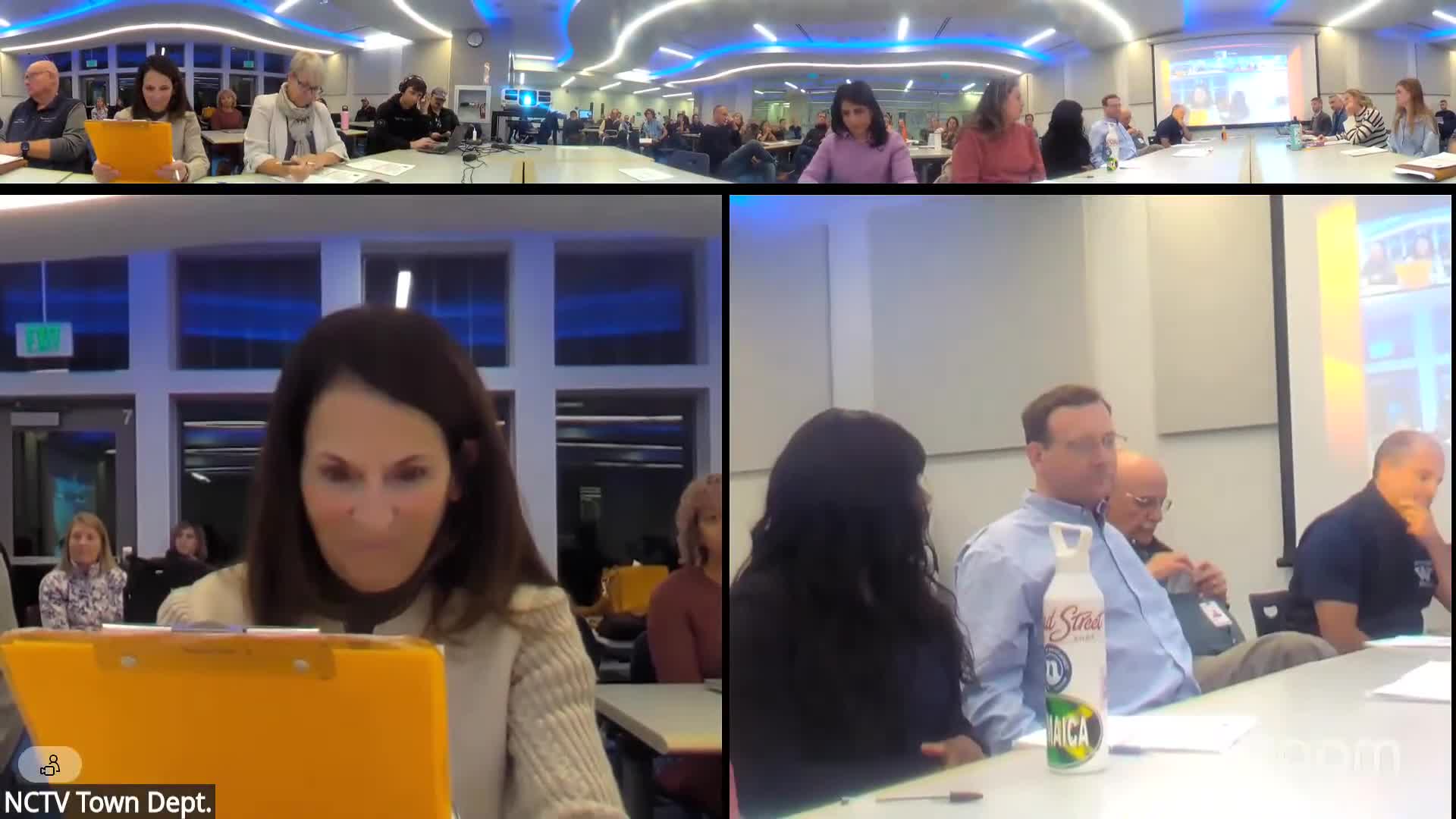
Summary
Members of the Nantucket School Committee and dozens of parents, coaches and students met Nov. 6 to review renovation options for Capizzo Stadium and surrounding athletic fields, with debate focused on athlete safety, field capacity and environmental concerns tied to synthetic turf and track materials.
Members of the Nantucket School Committee and dozens of parents, coaches and students met in a Nov. 6 workshop to review proposed renovations to Capizzo Stadium and the school’s athletic fields, a project estimated at roughly $20 million to $23 million depending on surfaces chosen.
The committee’s presentation and the public comment that followed centered on three options: the currently detailed design of a natural grass field with an asphalt running track; a natural grass field with a synthetic (polyurethane/EPDM) track; or a fully synthetic turf field paired with a synthetic track. SMRT, the project architect, said Option 1 (grass + asphalt track) is the only option currently at construction‑document level; Options 2 and 3 were presented conceptually for comparison.
Why it matters: Nantucket teams, coaches and families said current field conditions and limited capacity are constraining student participation, producing safety concerns and forcing teams to travel off island for practices and competitions. Supporters of synthetic surfaces argued turf and synthetic tracks can sustain far more hours of play (SMRT’s presentation cited 2,000–3,000 hours/year for turf versus 200–600 hours/year for a high‑performance grass field) and reduce pressure on multiple island fields. Opponents raised environmental and health concerns — especially the potential for PFAS and microplastic migration — and questioned long‑term lifecycle and recyclability costs.
"Please reject this misguided master plan and choose options that truly protect our children's health, like well maintained natural grass," said Mary Lepre, a nurse practitioner and NHS alum, during public comment. Lepre and other speakers criticized historical industry marketing and urged caution about turf products and their chemical content.
Safety and competition standards figured prominently. "Asphalt is not a safe or modern choice," said Jim Pagnato, a former aquatics director and acting president of the Nantucket Athletic Association, urging a modern synthetic track that meets competition standards and accommodates spike shoes. Several coaches said asphalt would prevent the school from hosting sanctioned meets and would increase travel burden and expense for families.
SMRT’s data presentation emphasized heavy site use. The firm’s 2021 field‑use chart — the most recent dataset in the packet — showed multiple campus fields receiving 800–1,700+ hours/year; SMRT said a sustainably maintained high‑performance grass field is typically suited for roughly 200–600 hours/year before showing significant turf loss. "When numbers are 1,000 hours or more, you're looking at significant turf loss, damage to the field surface, and increased potential for athlete injury," an SMRT presenter said.
Costs and lifecycle: SMRT provided high‑level cost comparisons and lifecycle notes. The consultant estimated a natural grass installation (with local cost adjustments included) in the low hundreds of thousands of dollars per field for initial construction and annual maintenance costs thereafter. Synthetic turf installation and infill were presented at roughly $600,000 (installation only) with full turf replacement every 8–12 years and periodic infill/top‑up. The SMRT presentation estimated the complete stadium project at about $20 million for the grass + asphalt option, roughly $21 million for grass + synthetic track, and $23 million or more for a fully synthetic option, noting island transport and labor raise local costs.
Environmental and public‑health concerns were raised repeatedly. Speakers cited tests and studies they believe show PFAS can leach from turf and other construction materials; one commenter said a recent independent test of a field on Martha’s Vineyard showed leachable PFAS at about 12 parts per trillion. Committee members and presenters noted that the Environmental Protection Agency has signaled PFAS as a public‑health concern and that several Massachusetts municipalities and watersheds have moratoria or restrictions under consideration.
SMRT responded that the industry has changed some manufacturing processes since 2021 and that turf products and infill have several formulations (engineered wood, cork, virgin polymer infill, crumb rubber, etc.), each with different maintenance, heat and migration characteristics. The architects also noted a turf recycling facility has opened in Brockton, Massachusetts, and described typical maintenance schedules (monthly grooming for turf; frequent mowing, irrigation and periodic resodding for grass).
What the committee asked for next: School committee members asked for updated, post‑2021 field‑usage data, an independent materials expert or neutral materials scientist to review PFAS and product testing, and clearer cost/timing estimates the committee could present for a town‑meeting warrant (committee members mentioned a mid‑December internal deadline to prepare warrant language). No formal decisions were taken; the chair reminded attendees this was a workshop, and the committee will continue design work and community engagement.
Voices from students and coaches underlined stakes beyond policy. Student athletes described ankle injuries, uneven playing surfaces and the loss of home‑meet opportunities; coaches said poor field conditions affect officials’ willingness to schedule matches and create competitive disadvantages for Nantucket teams.
The next steps identified by the committee included: updating usage and maintenance data, commissioning or identifying neutral technical review of materials (PFAS/leachability and heat metrics), and preparing materials for town‑meeting consideration. The committee also signaled interest in pursuing broader community engagement before a final surface decision and reminded the public that funding or procurement choices could be constrained by pending state legislation and local bylaws.
No motion to adopt a surface or a budget was made at the workshop. A motion to adjourn was made and approved at the end of the session.
— Reporting for this article relied on the Nov. 6 public workshop transcript and presentations by SMRT architects; all quotes are attributed to speakers who presented them during the meeting.