Consultant urges Columbia officials to temper timeline for McGinnis parcel sale and development
Loading...
Summary
A developer consultant told Columbia Borough Council that a fast public-sale schedule and tight build timelines would likely deter many buyers and that permitting, market demand and access constraints mean developers commonly require extended due-diligence and negotiation periods.
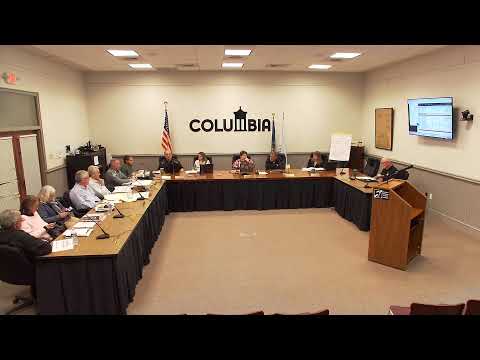
Rick Brenneman, a site civil consultant who has worked with local developers and the borough—s economic development contacts, told Columbia Borough Council on Nov. 6 that the borough—s proposed timetable for selling and developing the McGinnis parcel is likely too aggressive for many potential buyers.
Brenneman said developers face large up-front costs for engineering and permitting, and that state and federal reviews can add months or years. "Developers don't, despite popular and public opinion, most developers locally aren't rolling in it," he said, adding that due-diligence periods commonly run two to three years and sometimes far longer on commercial projects. He advised the borough to expect negotiation over the schedule and payment timing if it seeks buyers who will both acquire and build on the site.
Council members had asked whether to pursue a public auction, sealed bids or an Economic Development Corporation (EDC)-managed process. Brenneman warned that public auctions often attract bidders looking for lower-priced speculative buys and that imposing stringent construction timelines in a sealed-bid process may reduce the pool of qualified developers. He suggested the borough consider a reserve price for any public sale and be prepared to accept flexible timelines when negotiating with prospective developers.
Brenneman also discussed site-specific constraints that may narrow demand, saying the McGinnis parcel is poorly suited to ventures that require heavy truck traffic because access routes run through residential streets and include a single-lane underpass under the railroad. He suggested that zoning changes or overlay districts that expand allowable uses—for example to allow 55-and-older residential developments—could broaden the buyer pool and ease pressure on the school district, but cautioned the council to account for tax-exempt institutional buyers when drafting sale terms and deed restrictions.
During public comments and a follow-up exchange with Council, Brenneman said remediation behind the Columbia firehouse and grading work on the site were largely complete; he said the contractor plans to crush and reuse concrete on site and that, barring severe weather, much of the earth-moving work should be completed by late November. He also offered to meet with nearby residents to review drainage concerns.
The council did not take formal action at the workshop to change the sale process; members heard the consultant's recommendations and continued budget and capital discussions later in the meeting.