Get Full Government Meeting Transcripts, Videos, & Alerts Forever!
Get email alerts on the Traffic Safety topic
No spam. Unsubscribe anytime.
Town presents draft traffic‑calming guidelines emphasizing resident‑driven process and staged responses
Summary
The town presented draft traffic‑calming guidelines that prioritize a resident‑led request process, data collection (speeds and counts), and staged responses—education, enforcement, and engineering—while noting pavement, snowplow and maintenance constraints. Staff said PD operates two speed trailers and the town has four supplemental speed signs.
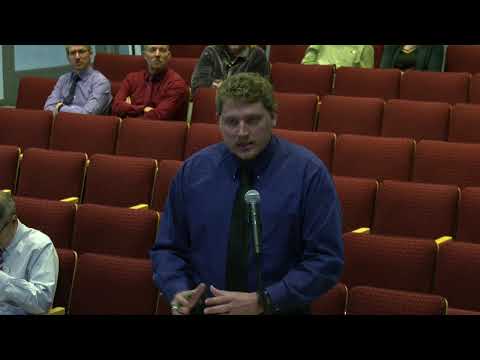
Parker Murphy, the town’s traffic engineer, presented draft traffic‑calming guidelines to the Prescott Valley Town Council on Nov. 6 that lay out a resident‑driven investigation process, data‑based criteria and a toolbox of engineering responses.
Murphy said the town’s population has more than doubled in 20 years and that residents increasingly report perceived high speeds on both residential and collector roadways. The draft guideline recommends that neighborhoods lead requests (including petitions) and that staff then collect objective data such as speed profiles and traffic volumes before determining remedies. Murphy emphasized a three‑part approach commonly summarized as education, enforcement and engineering.
The presentation listed low‑cost and temporary measures (lane markings, speed‑feedback trailers and targeted enforcement) as early steps and described more permanent engineering tools (narrowing, raised tables, curb extensions) as later steps when warranted by data. Murphy cautioned that some pavement sections (chip seal on native) do not support certain physical devices and that physical treatments can complicate snowplow operations and increase maintenance costs.
In discussion, staff and council noted the town’s existing inventory includes two speed trailers operated by police and four supplemental speed signs (two permanently sited on Glassford Hill). Staff suggested radar add‑ons for existing message boards as a lower‑cost interim solution and recommended a petition‑based neighborhood process to create community buy‑in. No changes to policy were adopted at the study session; staff presented the draft for feedback and said further refinement would follow.