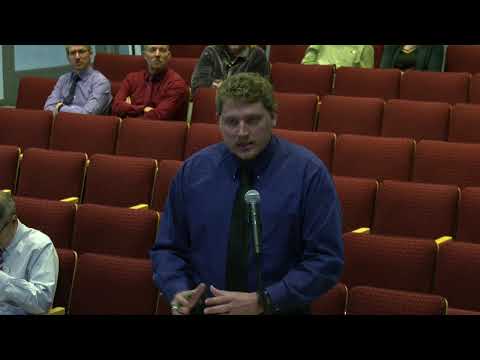
Staff outlines candidate street projects, grant application and cost estimates for possible bond
Loading...
Summary
Staff presented candidate transportation projects, cost estimates and a pending federal grant application for possible inclusion in a future street bond, citing crash history (2014–2023) and operational needs.
Town staff presented a package of candidate transportation projects to the Prescott Valley Town Council on Nov. 6 and discussed timing and funding options including a potential street bond, federal grants and phasing through annual budgets.
Parker Murphy, the town’s traffic engineer, summarized the safety action plan’s top projects and the analyses used to prioritize work (crash data from 2014–2023). Staff said the town applied for a federal grant (the combined corridors project referenced as 2, 4, 6 and 7) with an estimated request of about $11.7 million and had not received a determination as of the meeting.
Staff highlighted specific projects and order‑of‑magnitude estimates: Robert Road (Tranquil to Roundup) to be widened to a three‑lane section with intersection improvements, estimated at about $11.6 million and supported by crash history including one fatal and two serious crashes in the 2014–2023 window; pedestrian connectivity and sidewalks on Florentine between Yavapai/Windsong and Navajo to address observed walking on shoulders; and a downtown pathway and roadway reconstruction program with a cited unit estimate of roughly $7,000,000 per mile for full curb/gutter/sidewalk reconstruction. Staff noted a preliminary cost range of $5–9 million for certain Jasper Parkway corridor intersection and widening options and said any work on SR 69 would require coordination with the Arizona Department of Transportation.
Murphy told council the list presented could be broken into smaller project components for bidding and that the packet included unit costs from the safety action plan. He said the set of candidate projects under consideration totals less than $30 million and that next steps would include selecting projects to advance, preparing design concept reports (DCRs) to assess feasibility and moving into detailed design. Staff also flagged internal staffing constraints in public works needed to deliver multiple concurrent projects.
Councilmembers discussed balancing projects that show high crash history with those that will serve the most vehicle trips per day and suggested using traffic counts to prioritize. Staff recommended using the conceptual lists to think about grants and to plan for a potential bond issuance when existing debt obligations are paid off. Staff estimated larger projects could take about two years before construction begins once design and permitting move forward; small projects could advance sooner.
No formal action or vote was taken at the study session; staff sought council input for prioritization ahead of budget and grant cycles.