Get Full Government Meeting Transcripts, Videos, & Alerts Forever!
Get email alerts on the Governance Support topic
No spam. Unsubscribe anytime.
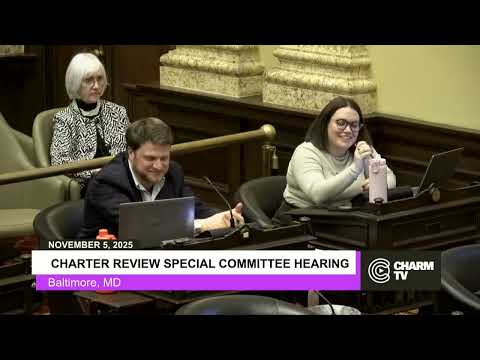
Committee weighs making DLR independent, city seal question and outside‑counsel process
Summary
Members discussed proposals to make the Department of Legislative Reference an independent legislative agency merged with council services, to examine where the city seal should reside, and to create a process for entities to petition for outside counsel.
The committee discussed several governance and support‑function proposals that aim to change how the council and staffed offices operate.
Council staff described a proposal to reform the Department of Legislative Reference (DLR) and the Office of Council Services by positioning DLR as an independent legislative branch agency and merging certain operations with council services. Councilwoman Odette Ramos compared the model to Annapolis, saying the change would help ensure that drafting and information services are "deemed as independent." Vice Chair John Bullock said he would be interested in how DLR and council services would operationalize such a change.
Committee members also raised a narrow administrative query about the city seal. Councilmember Ramos said she was still waiting for an ordinance number and the seal on one of her bills and asked whether the seal, currently controlled by the treasury, needs to be moved or clarified.
Aaron de Grafenwright outlined a proposal to provide a route for city entities — including boards like the Police Accountability Board — to petition a circuit court to obtain outside counsel when the law department's representation is perceived as a conflict of interest. The goal, he said, is to create a neutral process for resolving such disputes.
No formal drafting instructions were adopted; committee members asked staff and the law department to examine operational questions, conflict‑of‑interest safeguards, and any code or regulatory consequences of proposed changes.